
Scheduling
Appointments Falling Apart During the Day? Here’s Why It Happens and How to Fix It 📅
The day looks fine at 8 AM, but by 2 PM you are shuffling bookings, filling gaps, and apologizing for delays. That chaos is not bad luck—it is a systems issue that can be fixed.
Appointments fall apart during the day when confirmations are weak, last-minute cancellations slip through, buffers are unrealistic, and staff make manual adjustments mid-service. Stabilize the schedule with strong pre-opening confirmations, clear same-day rules, automated reminders, built-in buffers, and real-time visibility so salon booking chaos turns into a steady flow. Systems, not luck, keep the day together.
Salon schedule falling apart moments usually start small: one no-show, one late arrival, one rushed reshuffle. Without tight processes, those micro-issues cascade. The goal is to prevent the cascade before it starts.
Remember the primary keyword—appointments falling apart during the day—describes a preventable process gap. Fix the inputs, and the day holds together.
Why salon appointments fall apart during the day 📅
Weak confirmation before the day starts: if clients have not confirmed by morning, you begin with risk baked in.
Late cancellations and no-shows: when canceling is easier than rescheduling, clients disappear and leave empty prime slots.
Poor buffer planning: optimistic durations and no cleanup buffers create domino delays after the first late start.
Too many manual adjustments during service hours: every mid-day reshuffle steals attention from guests and increases error risk.
Channel sprawl: confirmations spread across email, SMS, and DMs cause misses and duplicated work.
First-hand insight: salons that required confirmation by 6 PM the prior day saw fewer morning surprises and a calmer opening hour.
How small schedule changes create full-day chaos 📅
One missed appointment creates a hole that rarely fills instantly, dropping hourly revenue.
A single late arrival pushes back the next guest; ten minutes here becomes thirty by mid-day.
Manual swaps under pressure lead to double-booking or forgotten notes, causing service hiccups later.
Gaps block add-ons: scattered five- and ten-minute holes cannot accept profitable upgrades, so daily totals slide.
Staff focus fractures: stylists think about timing more than client care, which hurts upsell and rebook rates.
The hidden cost of unstable daily schedules 💰
Revenue: every unfilled gap is lost ticket value. Repeated slips turn a “full” day into a mediocre one.
Staff focus and morale: constant reshuffling is tiring and reduces service consistency.
Client experience: rushed starts and uneven pacing erode trust; clients notice stress and may not rebook.
End-of-day exhaustion: teams feel drained from firefighting, not from serving guests.
Brand perception: if clients see an empty chair after being told you were fully booked, credibility drops.
Retail and add-ons: distracted teams forget to recommend products or upgrades, lowering average ticket.
Step-by-step ways to stabilize salon appointments ✅
Strong confirmation before opening hours: require confirmations by the night before; send a 24h reminder with one-tap confirm/reschedule.
Clear rules for same-day changes: set a cutoff and offer reschedule links instead of cancellations; deposits encourage commitment.
Automated reminders instead of manual chasing: use SMS or push at 24h and a same-day nudge timed to the commute window.
Built-in buffers for delays: standardize cleanup and reset buffers by service type so small slips do not pile up.
Real-time visibility into schedule changes: show the team live updates so they can adjust prep and seating without guessing.
Align service blocks: map services to 30/45/60-minute blocks to reduce odd gaps and keep stacking clean.
Use waitlists intelligently: auto-offer newly opened slots to waitlisted clients starting with highest reliability or value.
Channel discipline: keep confirmations and updates in one primary channel; avoid scattering across DMs and email.
Measure and iterate: track no-show and late-cancel times; adjust reminder timing and buffer lengths based on real data.
Sender clarity: use the salon name and concise tone in every message so clients trust and act on the link.
Message length: keep prompts short with one call to action; long texts get skimmed and skipped.
Operational insight: one salon added a 3-hour same-day push plus standardized 10-minute cleanup buffers and recovered 4–6 slots weekly without adding hours.
Operational tip: test your own flow weekly—book, confirm, and reschedule from your phone. If you hit friction, clients do too.
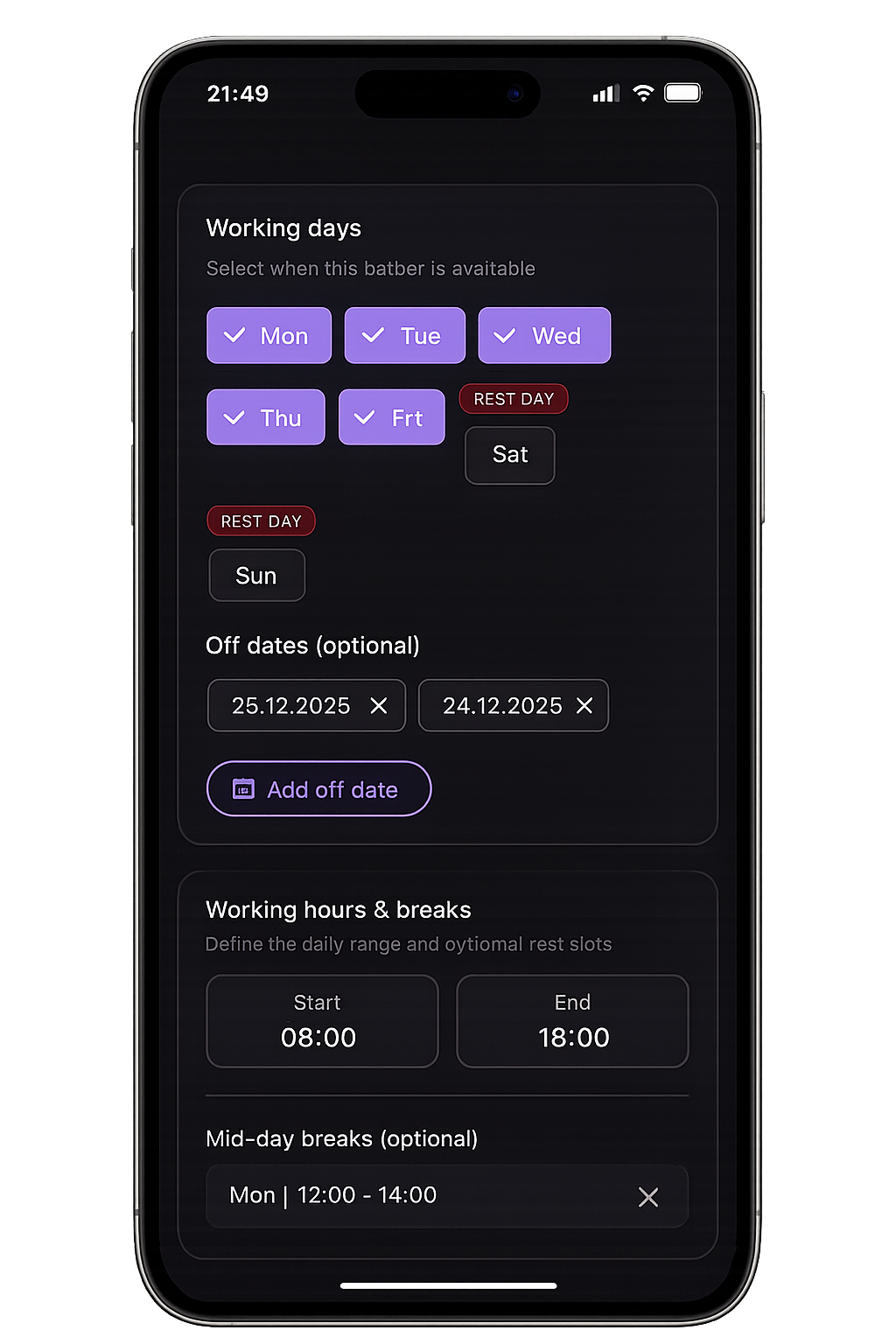
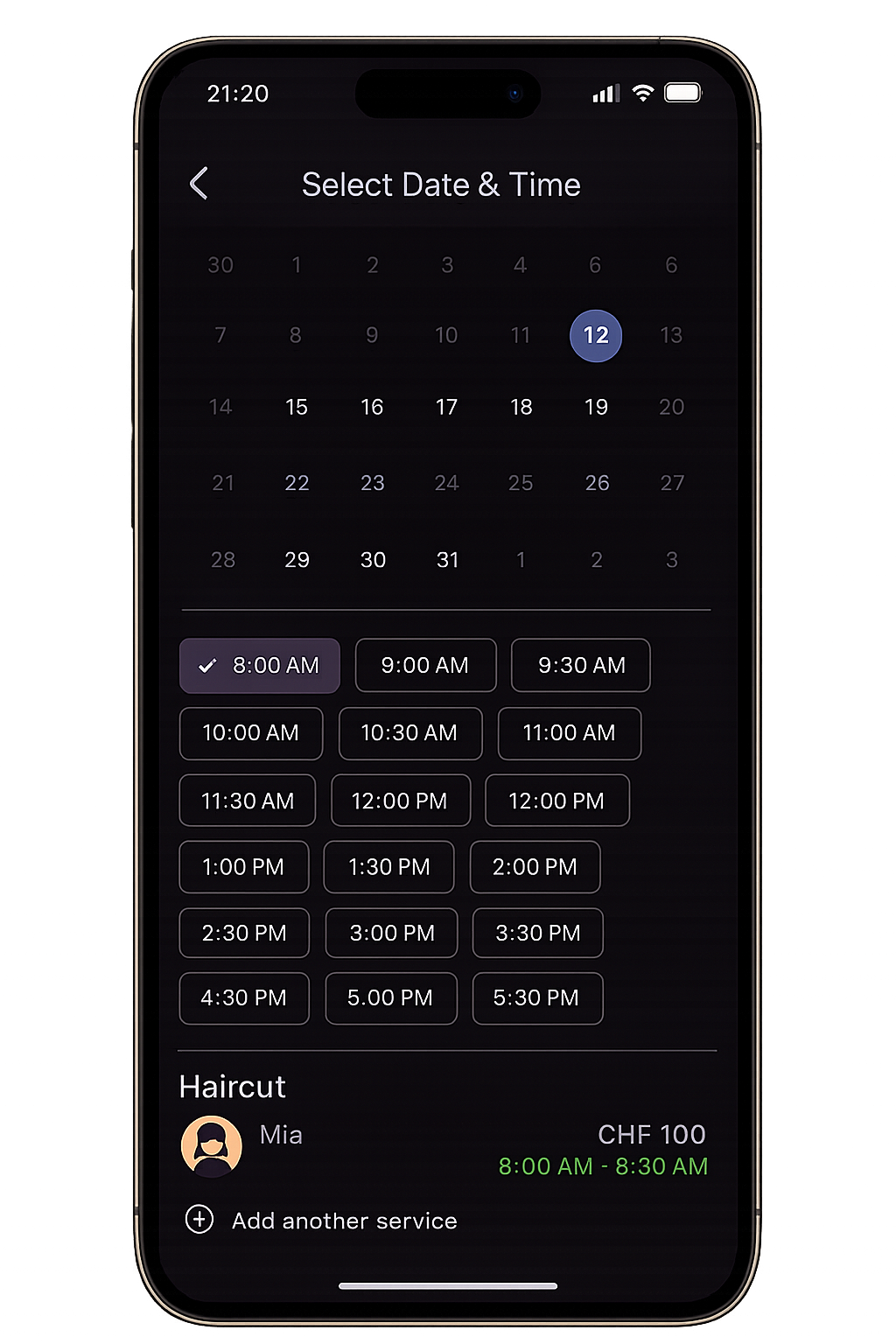
Admin + user
Admin controls on the left. Client booking on the right.
Your team manages schedules, approvals, and offers in the Admin app, while clients book and manage visits in the User app. Both stay fully on-brand.
How a branded salon app keeps appointments from falling apart 📱
A branded app centralizes booking, confirmations, and updates so clients and staff share one source of truth.
Push notifications deliver confirmations and commute-timed reminders with one-tap responses, reducing manual follow-ups.
In-app rescheduling and deposits add light friction to cancellations and make moving a time simpler than skipping.
SalonApp, for example, provides a branded salon app that aligns policies, buffers, and reminders in one consistent flow, keeping the day predictable.
Because clients see the same flow every time, behavior stabilizes: confirm, arrive, or reschedule—instead of disappearing.
Push and in-app alerts bypass crowded inboxes, helping clients act at the right time and preventing last-minute surprises.
Frequently Asked Questions ❓
Why do salon schedules fall apart during the day?
Weak confirmations, late cancellations, and poor buffers create cascading delays. Tighten pre-day confirmations, add realistic buffers, and use automated reminders to prevent slips from spreading.
How can salons reduce same-day cancellations?
Require confirmation before opening, use deposits or card-on-file, and provide one-tap reschedule links. Clear policies plus easy rescheduling discourage last-minute cancellations.
Can better systems really stabilize daily operations?
Yes. Consistent confirmations, smart reminders, built-in buffers, and a single source of truth reduce surprises. Teams spend less time firefighting and more time serving clients.
Conclusion 🎯
Appointments falling apart during the day is a systems problem. Strong confirmations, smart reminders, realistic buffers, and clear rules keep the day intact.
Build predictable flows—ideally in a branded app—so clients confirm, arrive, or reschedule without manual chasing. You will steady revenue, calm the floor, and end the day with energy to spare.
Internal link ideas: connect to guides on reminder timing, buffer planning, and no-show reduction using anchor text like reminder playbook, buffer planning checklist, and no-show reduction checklist.