
Technology
Do Salons Really Need Their Own App? A Practical Breakdown ✨
Many salon owners hesitate: do salons really need their own app, or is it just hype? The answer depends on your goals, client behavior, and how you run operations. This guide breaks down when a salon mobile app is worth it—and when it is not.
Apps should solve problems: booking friction, no-shows, weak brand presence, and inconsistent client touchpoints. If those issues block growth, an app can pay for itself. If not, simpler tools may suffice.
The real question is ROI: if the app reduces no-shows, raises rebooking, and keeps your brand front and center, it earns its keep. If you run on walk-ins and phone calls with no friction, you may not need one.
Use numbers to decide: track no-show rate, rebook rate, and average ticket today. If an app can realistically improve those, the investment is justified.
Why salons question the need for their own app 😓
Cost concerns: custom apps sound expensive compared to simple booking links.
Complexity fears: owners worry about maintenance, updates, and training staff.
Adoption doubts: “Clients won’t download another app” is a common refrain.
Existing tools: salons already use booking sites, phones, and social DMs—so an app can feel redundant.
Unclear ROI: without clear metrics (no-shows, repeat visits, basket size), it is hard to justify the investment.
Integration concerns: owners fear adding one more system that staff must learn and maintain.
Client fatigue: some clients resist new apps unless the experience is clearly faster or more convenient than calling.
What problems a salon app actually solves ✨
Booking friction: clients see real-time availability and book in a few taps instead of calling or messaging.
Reminders and updates: automated confirmations, reminders, and policy visibility cut no-shows and last-minute confusion.
Brand presence: your icon on the home screen keeps your salon top-of-mind, reinforcing beauty salon technology and branding.
Repeat visits: push prompts and easy rebooking increase client return rates without extra ad spend.
Consistency: one place for notes, preferences, and policies reduces errors across staff and channels.
Payments and deposits: storing cards on file and transparent policies reduce late cancels and secure high-value slots.
Operational visibility: owners see booking patterns, peak-hour strain, and rebook behavior in one place, making staffing and promotion decisions easier.
When a salon does NOT need its own app ✨
Very low booking volume where phones/DMs suffice and no-shows are minimal.
Walk-in-only salons with no appointments to manage and limited client data needs.
Single-provider setups with stable clientele and little need for reminders or marketing.
Short-term or pop-up operations where a simple booking link meets all needs.
Salons that lack capacity to respond to increased demand—wait until operations are stable before adding another channel.
When a branded salon app makes sense 📱
Appointment-heavy salons where scheduling errors or no-shows hurt revenue.
Teams that need one source of truth for availability, notes, and policies across staff.
Salons focused on retention and rebooking—where push notifications and stored preferences lift loyalty.
Brands competing on experience, not price, who want a salon booking app to signal professionalism and convenience.
SalonApp, for example, bundles booking, reminders, payments on file, and branded UX so clients book faster and return more often.
Multi-location or multi-provider teams that need consistent policies and data in one place benefit most from a single branded app.
Salons wanting to steer clients to off-peak times or specific providers can use app-based rules and prompts to shape demand.
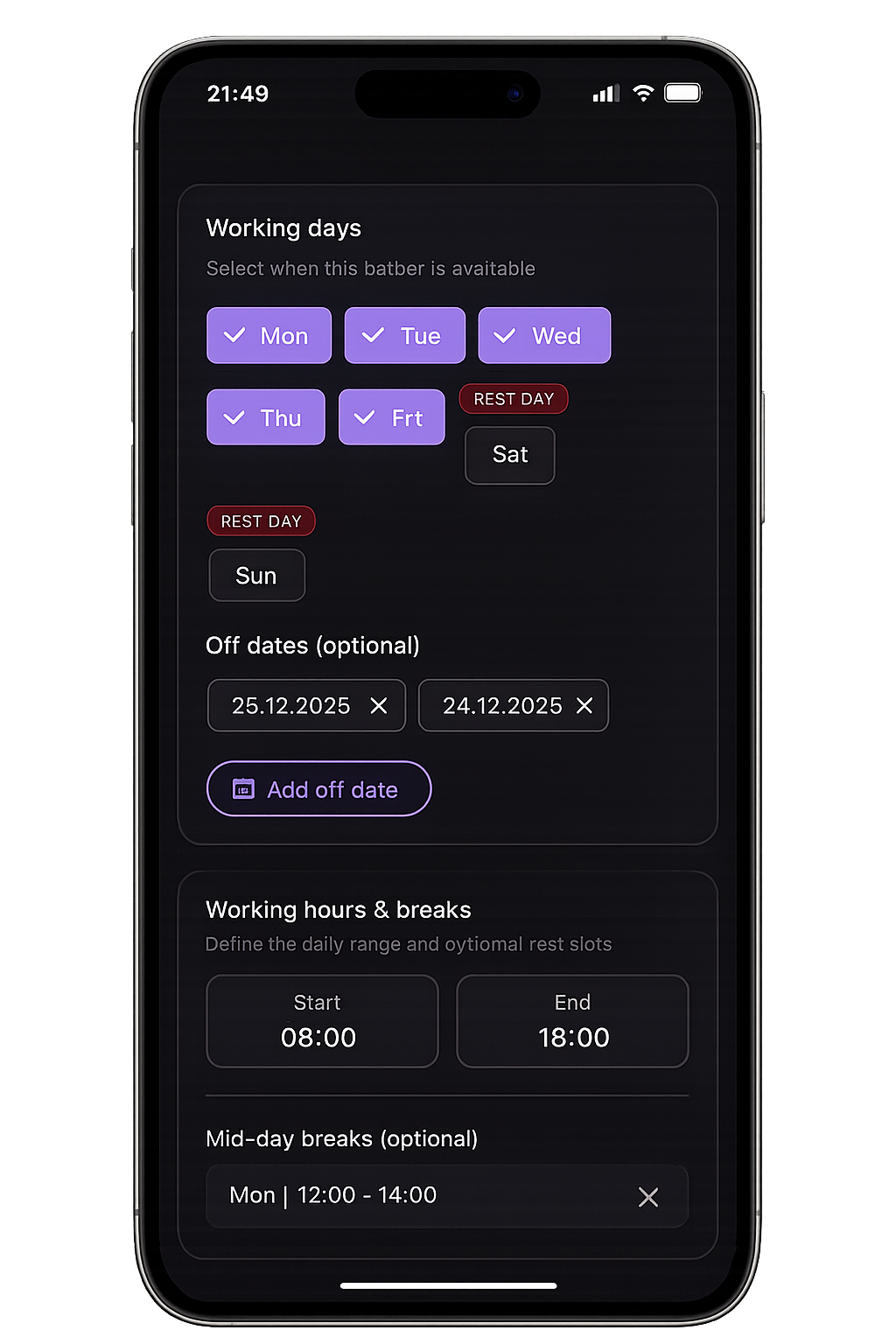
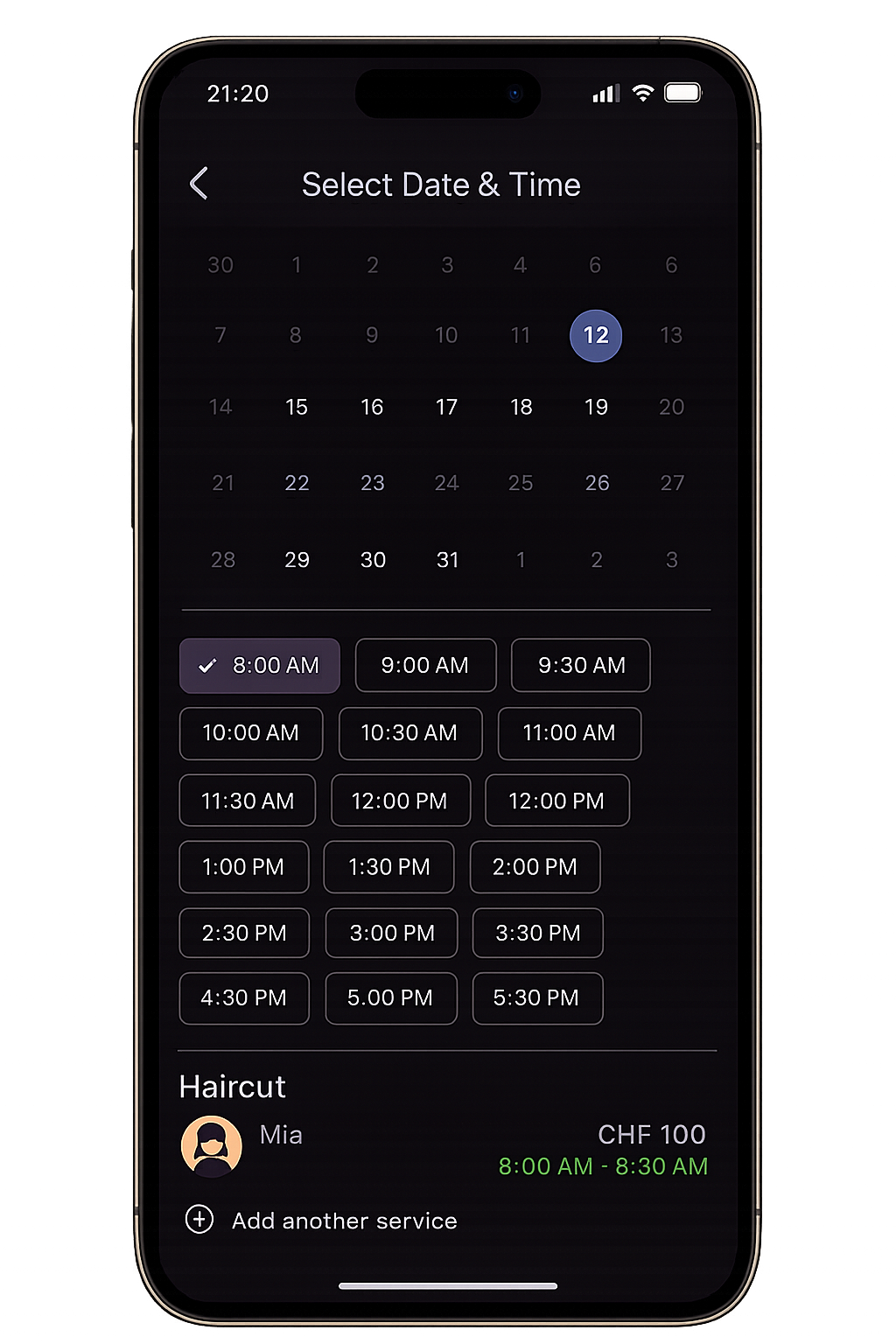
Admin + user
Admin controls on the left. Client booking on the right.
Your team manages schedules, approvals, and offers in the Admin app, while clients book and manage visits in the User app. Both stay fully on-brand.
Frequently Asked Questions ❓
Is a salon app worth it?
Yes, if you have meaningful appointment volume and want to reduce no-shows, increase rebooking, and present a consistent brand. If your volume is tiny and mostly walk-ins, a full app may be overkill.
Will clients actually use a salon app?
Clients use apps that are faster than calling and that remember their preferences. Make booking and rebooking a few taps, and adoption follows.
What features matter most in a salon app?
Real-time availability, easy rebooking, push reminders, stored preferences/payment, and clear policies. Add waitlists, deposits, and service-specific buffers to protect peak hours and reduce no-shows.
How do I measure ROI for a salon app?
Track no-show rate, rebook rate, average ticket, and admin time saved. Compare before/after; if those metrics improve, the app is paying for itself.
Conclusion 🎯
Answering “do salons really need their own app” comes down to fit. If booking friction, no-shows, and weak brand presence slow growth, an app solves real problems. If your model is simple and low-volume, lighter tools may be enough.
Evaluate technology by the efficiency and loyalty it creates. A branded salon app can be the right move when it streamlines booking, reinforces your brand, and keeps clients returning.
Start with a clear test: define your no-show rate, rebook rate, and average ticket now. If an app can move those numbers, the investment is justified; if not, keep it simple.
Reassess quarterly. If volume grows and friction rises, adding an app later can be the right move—timing matters as much as the tool.