
Operations
How Better Scheduling Increases Salon Revenue (Without Adding More Clients) 💰
Many salons chase growth with marketing, discounts, and ads. Meanwhile, the schedule leaks revenue through gaps, overruns, and preventable no-shows. Scheduling is not admin—it is a revenue strategy hiding in plain sight.
Better scheduling increases salon revenue by tightening gaps, preventing overruns, and making rebooking effortless. Smart time slots, enforced buffers, and automated reminders raise chair utilization and reduce no-shows—lifting daily revenue without adding more clients.
Searches for how better scheduling increases salon revenue often focus on getting more bookings. The real upside comes from optimizing what you already have: fewer idle minutes, smoother turnover, and predictable rebooking. With disciplined scheduling, you raise revenue per day and protect profit margins.
Owners who track revenue per hour of stylist time quickly see the lift. Small changes—like aligning service durations to reality—turn lost minutes into full services over a week.
Why poor scheduling limits salon revenue 💰
Gaps between services leave chairs idle. Five unused 10-minute gaps across a day is nearly an hour lost.
Overbooking and sloppy buffers create delays, overtime, and rushed services that reduce tips and retail.
Last-minute cancellations leave holes that are hard to fill if reminders and rescheduling are manual.
Manual booking creates inconsistent service durations and incorrect pairings, leading to overruns and comped work.
First-hand insight: when we measured a salon’s books, tightening buffers and standardizing durations lifted weekly revenue by a full day’s worth of tickets without changing marketing spend.
Another drag is stylist mismatch. When the wrong services are paired with the wrong provider or room, throughput drops and redo risk rises.
How better scheduling improves revenue per day 💰
Optimized time slots increase chair utilization. When services fit together cleanly, you add usable capacity without adding hours.
Reduced downtime means more services per stylist per shift, raising revenue per labor hour.
Predictable timing keeps staff on pace, reducing overtime and preventing late-day cancellations from running behind.
Balanced books protect premium hours. You reserve prime slots for high-value services while steering shorter services to shoulder times.
Clients notice smoother days. When appointments start on time and end on time, satisfaction and rebooking rise.
Beauty salon scheduling discipline also reduces emergency discounts to fill gaps, so you keep pricing integrity intact.
Key scheduling strategies that increase salon revenue 💰
Smart time slot management: Standardize service durations and pair services that fit together (e.g., cut + blowout) to reduce dead space.
Buffer times to prevent delays: Build prep and cleanup buffers into long services. This protects timing and reduces overtime risk.
Controlled peak-hour bookings: Reserve peak slots for higher-ticket or time-predictable services. Use deposits or minimums to protect those hours.
Automated confirmations and reminders: Send two reminders (48h and 24h) with clear prep notes and easy reschedule links to reduce no-shows.
Easier rebooking flow: Prompt rebooking at checkout or via follow-up messages so clients lock in their next visit while intent is high.
Operational tip: audit your week for “micro-gaps.” Even 5-minute trims add up. Adjust durations by stylist to match reality instead of default estimates.
Scheduling playbook: cap concurrent long chemical services if they strain assistants or bowls. Overloading a station early creates late-day backups that cut into revenue.
How better scheduling improves long-term revenue stability 💰
Consistent schedules make revenue more predictable, which steadies payroll, inventory, and marketing plans.
Higher rebooking rates flatten demand volatility. When clients prebook, you rely less on last-minute fills.
Clear timing reduces staff stress and turnover, which protects service quality and retention.
Reliable timing boosts loyalty: clients trust that you run on time, so they are more likely to book premium services.
Data from a disciplined schedule highlights true capacity. You see when to add a chair, shift hours, or raise prices.
Steady books also improve cash flow planning, letting you invest in training or equipment without fearing slow weeks.
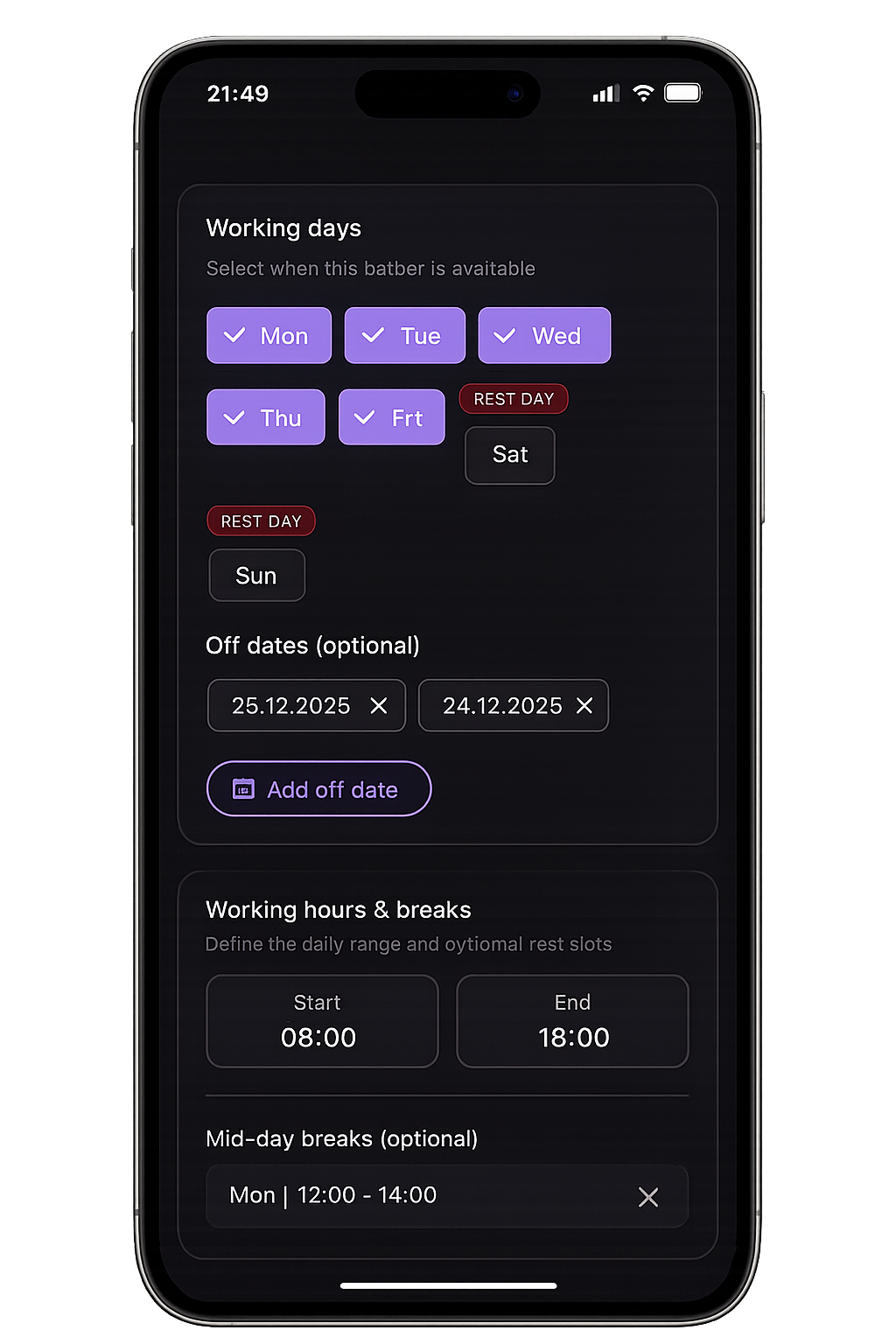
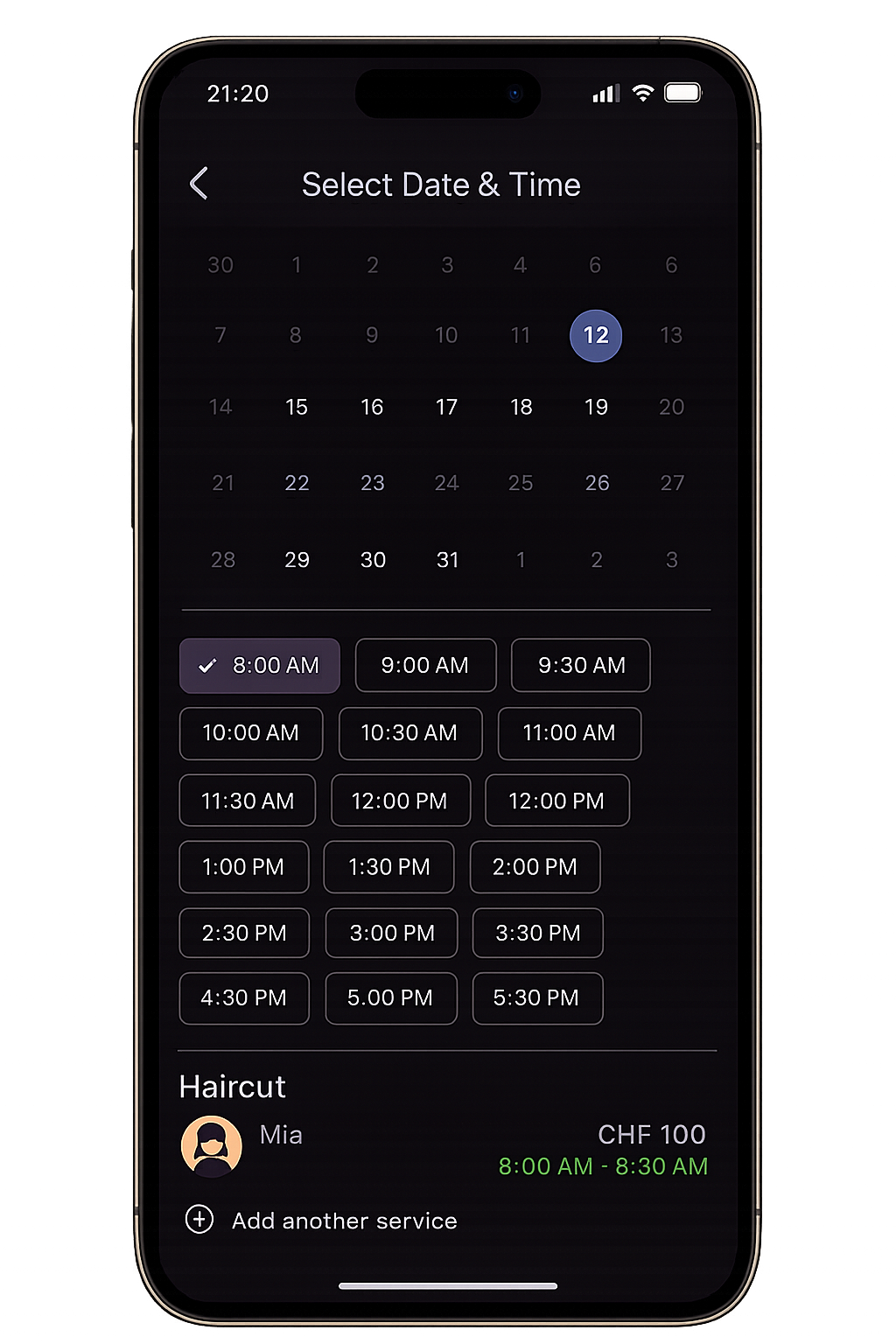
Admin + user
Admin controls on the left. Client booking on the right.
Your team manages schedules, approvals, and offers in the Admin app, while clients book and manage visits in the User app. Both stay fully on-brand.
How a branded salon app supports better scheduling 📱
A branded app lets you control booking flows, enforce buffers, and present only the slots that keep the day balanced.
Push notifications and in-app rescheduling fill gaps faster and reduce calls to the desk.
Policies and deposits sit inside your brand experience, increasing commitment for peak times.
SalonApp, for example, offers a branded salon app that aligns booking, reminders, and policies in one place so beauty salon scheduling stays efficient and on-brand.
Home-screen presence keeps rebooking habitual, increasing visit frequency without extra marketing spend.
Because the app reflects your brand, clients perceive these controls as premium service, not friction—supporting higher retention and ticket size.
Frequently Asked Questions ❓
How does scheduling affect salon revenue?
Scheduling controls chair utilization, overtime risk, and no-shows. Tight, well-buffered schedules increase services per day, keep staff on pace, and protect high-value slots—raising revenue without more marketing.
Can better scheduling replace more marketing?
Often, yes. Optimizing beauty salon scheduling lifts revenue per client and per hour. Many salons find more profit in fixing gaps and no-shows than in buying new traffic.
What tools help improve salon scheduling?
Use salon booking efficiency tools with enforced durations, buffers, automated reminders, and easy rescheduling. A branded salon app adds control over peak slots and keeps clients in one flow.
Conclusion 🎯
How better scheduling increases salon revenue is straightforward: tighter calendars, fewer gaps, and reliable reminders drive more services per day and steadier income.
Treat scheduling as a growth lever, not paperwork. Standardize durations, enforce buffers, automate reminders, and guide rebooking. A branded app can keep the flow consistent and client-friendly.
For internal links, connect this guide to resources on booking automation, rebooking scripts, and revenue optimization with anchor text like online booking checklist, rebooking playbook, and salon revenue strategy.