
Operations
How Missed Appointments Hurt Salon Revenue (More Than You Think) 🚫
One missed appointment looks small. Ten a week is a silent leak. Salon no-shows and late cancellations erode revenue, inflate costs, and slow growth—even when chairs look busy the rest of the day.
Missed salon appointments hurt revenue by leaving chairs empty, wasting paid labor, and cutting off add-on sales and rebooking. Over a month, a few no-shows per week can wipe out thousands in service revenue and reduce client lifetime value. Reducing salon no-shows is one of the fastest ways to protect cash flow.
The primary question is how missed appointments hurt salon revenue across both immediate and long-term metrics. The answer spans lost tickets, weaker retail attachment, staff underutilization, and lower loyalty. With the right systems, you can make no-shows the exception, not a weekly pattern.
Think of no-shows as paying for labor and rent without earning anything back. When the pattern repeats, profit shrinks even if topline revenue looks stable.
The real cost of missed appointments for salons 🚫
Direct revenue loss: the service ticket disappears. If your average ticket is $95 and you miss five appointments a week, that is roughly $1,900 per month gone.
Empty chairs still carry cost. Stylists and front desk are on the clock; rent and utilities are fixed. Labor paid without revenue lowers margin immediately.
Upsells vanish. Color add-ons, treatments, and retail recommendations do not happen without the client in the chair.
Lower client lifetime value (LTV). Every missed visit delays the next booking and increases the chance clients drift to competitors.
Schedule ripple effects. A late cancellation can leave gaps that cannot be refilled in time, especially for longer services.
First-hand insight: when we measured a salon with an 8% no-show rate, reducing it to 4% added the equivalent of one extra stylist day of revenue per week without adding staff.
Lost momentum compounds. Missed visits also reduce retail attachment because staff cannot recommend products at the right cadence. That weakens both service and product revenue.
Why missed appointments keep happening in salons 🚫
Weak reminders or manual processes: emails sent late, texts forgotten, or calls made only when someone remembers.
Low client commitment: no deposits, unclear policies, or too-easy cancellations reduce accountability.
Fragmented booking: when clients book through DMs, phone, and walk-ins, it is easy to lose confirmations or double-book.
No easy reschedule path: if rescheduling is hard, clients default to canceling or simply not showing.
Policy enforcement gaps: if fees are inconsistent, clients learn there is no consequence for no-shows.
Unclear prep instructions: clients who do not know how to prep for a service may cancel late. Clear prep notes reduce friction and increase follow-through.
How missed appointments impact long-term salon revenue 🚫
Consistent no-shows distort monthly revenue projections, making inventory and payroll planning harder.
Cash flow tightens when peak hours are underfilled. You may cut back on marketing or training because the budget looks thin.
Growth slows. With less predictable revenue, opening new chairs, hiring, or adding services feels riskier.
Rebooking momentum breaks. Clients who skip visits often delay the next one, lowering annual visit count.
Staff morale dips when schedules fluctuate. High performers notice when their books are unstable and may look elsewhere.
We also see discount creep: owners offer last-minute discounts to backfill gaps, training clients to wait for deals instead of booking early.
Step-by-step ways to reduce missed appointments ✅
Clear booking rules and expectations: Publish policies on deposits, late cancels, and grace periods. Make them visible at booking and in confirmations.
Automated confirmations and reminders: Send immediate confirmations plus reminders 48 and 24 hours before. Include prep notes and links to reschedule.
Easy rescheduling instead of cancellation: Offer a clear reschedule link. Clients who can move an appointment are less likely to no-show.
Stronger client accountability: Use deposits for high-demand services or peak slots. Enforce no-show fees consistently so clients take commitments seriously.
Consistent booking experience: Keep clients in one flow—website, branded app, or front desk—so confirmations and reminders are reliable and on-brand.
Operational tip: track no-shows by service type and daypart. Often, a small policy tweak (like deposits on Fridays after 3pm) fixes the worst pockets of loss.
Front desk playbook: when a client calls to cancel, offer two alternative times immediately. Make rescheduling the default, not cancellation.
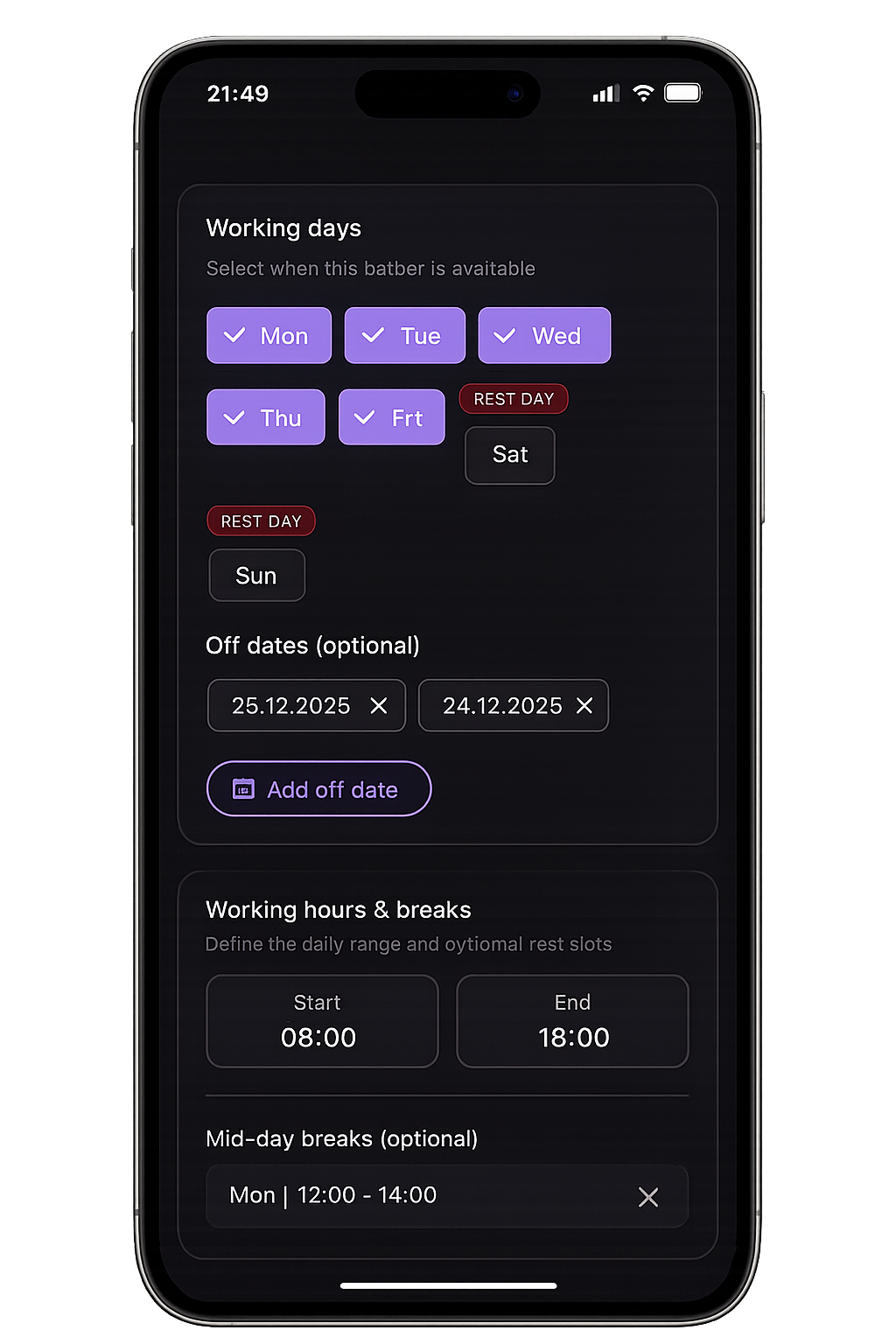
Admin + user
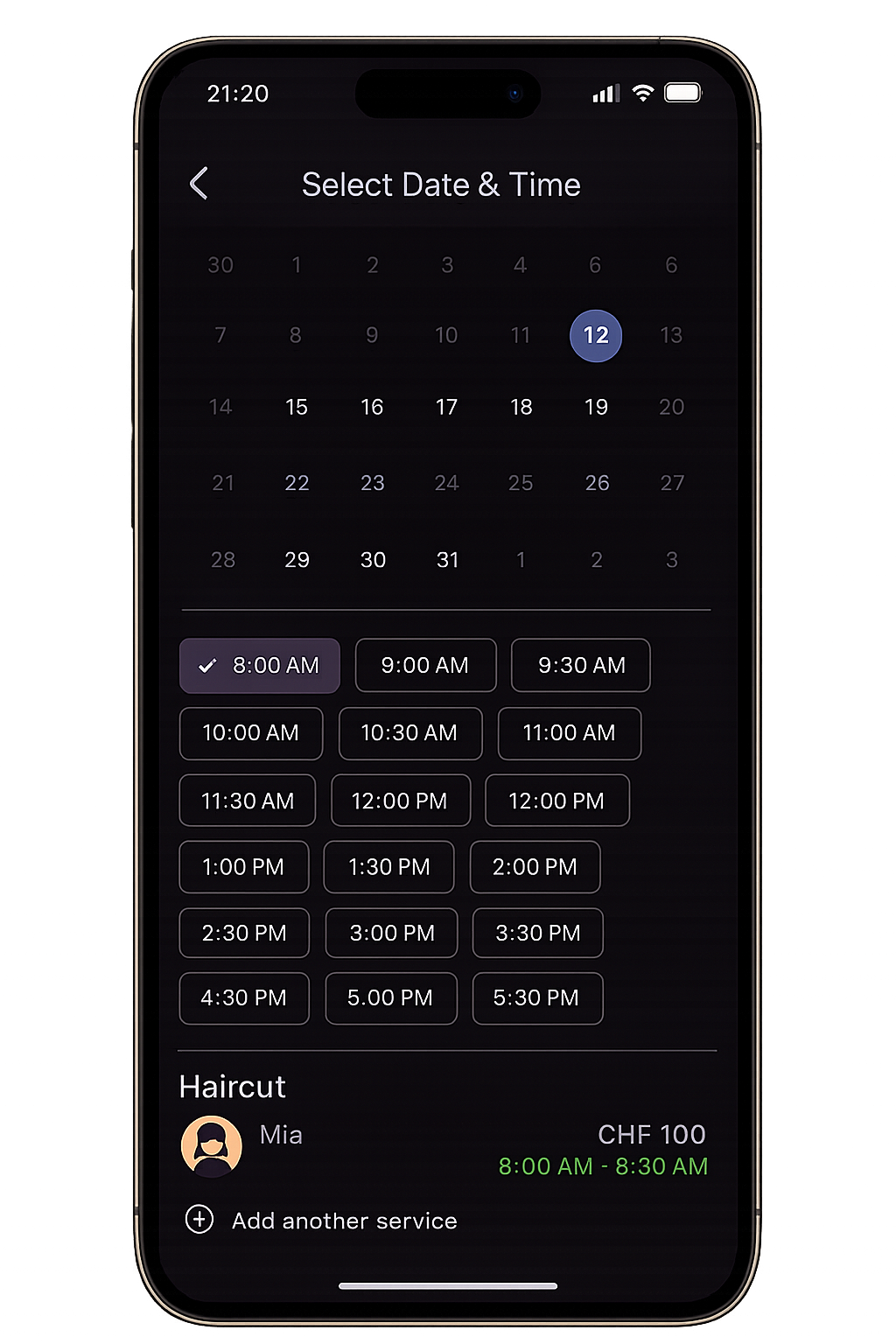
Admin controls on the left. Client booking on the right.
Your team manages schedules, approvals, and offers in the Admin app, while clients book and manage visits in the User app. Both stay fully on-brand.
How a branded salon app helps protect revenue 📱
A branded app keeps clients in your ecosystem with on-brand reminders, push notifications, and easy rescheduling. Home-screen presence makes rebooking habitual.
Direct booking reduces fragmentation. Clients are less likely to DM or call last-minute when the app is faster and clearer.
Policies and deposits are enforced in one place, reducing loopholes. Prep and post-care notes travel with each booking, lowering redo risk.
SalonApp, for example, offers a branded salon app where your colors, policies, and reminders live together, helping reduce salon no-shows and keep revenue predictable.
Clients also feel more accountable when they book inside your branded environment versus a generic marketplace. That ownership alone cuts casual cancellations.
Frequently Asked Questions ❓
How much do missed appointments cost salons?
Multiply your average ticket by missed appointments per week, then by four. Even five misses at $95 each is ~$1,900 per month, not counting lost retail and LTV impact.
Do reminders really reduce no-shows?
Yes. Automated confirmations plus 48- and 24-hour reminders with reschedule links cut no-shows significantly, especially when paired with clear policies.
Should salons charge a no-show fee?
For peak times or long services, a deposit or no-show fee protects revenue and signals commitment. Be transparent at booking and consistent in enforcement.
Conclusion 🎯
How missed appointments hurt salon revenue is not theoretical—it shows up in cash flow, staff morale, and slower growth. Treat no-shows as a fixable leak.
Put clear policies, automation, and a consistent booking experience in place. A branded salon app can reinforce accountability and make rebooking effortless.
For internal links, connect this guide to pages on booking automation, policy templates, and revenue protection tactics using varied anchor text like no-show policy checklist, reminder automation tips, and salon revenue playbook.