
Operations
How to Manage Peak Hours in a Beauty Salon Without Burning Out Your Team 🛠️
Peak hours feel great on paper—every chair booked—but in reality you get long waits, stressed staff, and rushed services. Clients feel the chaos and loyalty drops. This guide shows how to manage peak hours in a beauty salon with practical scheduling, demand shaping, and better visibility.
When you control booking flow, set rules that protect quality, and offer easy off-peak options, you keep revenue high without exhausting your team.
The core of how to manage peak hours in a beauty salon is controlling demand, not just coping with it. Shape the flow so every booked hour stays profitable and calm.
Why peak hours create problems for beauty salons 😓
Demand piles into narrow windows (evenings, weekends), creating bottlenecks and overtime.
Rushed services lead to mistakes, redos, and refunds—eroding margin.
Staff fatigue spikes. Back-to-back color + cut blocks with no buffers burn out stylists and reduce upsell capacity.
Clients wait longer, perceive disorganization, and leave fewer positive reviews.
Inventory and rooms get misaligned: not enough bowls, towels, or stations ready when everyone arrives at once.
Upsell opportunities vanish when staff are rushed. Peak chaos reduces retail attach and add-on treatments.
Why adding more staff during peak hours isn’t always the answer 😓
Overstaffing for peak windows raises labor costs and leaves idle time in off-peak hours.
Last-minute staffing changes create inconsistency; new faces without process training can slow the day further.
More staff without better scheduling rules still creates overlaps, double-book risk, and uneven workloads.
Reactive scheduling hides the real issue: unmanaged booking flow and lack of demand shaping.
Adding bodies without process also hurts culture—burnout spreads when new helpers are thrown into messy systems.
Step-by-step ways to manage peak hours effectively ✅
Apply these steps together to manage busy salon times without sacrificing quality.
- Control booking availability during peak times 📆
Cap certain services (time-intensive color corrections) during peak windows. Require buffers for complex combos. Keep rapid services available to maximize throughput. - Spread demand with smart scheduling rules 🧭
Stagger start times for long services, link assistants to providers, and enforce buffers. Use provider-specific availability to avoid everyone starting on the hour. - Encourage off-peak bookings 🎯
Offer small perks for shoulder times (midday weekdays), promote them in confirmations, and let clients see faster options. Present off-peak slots first in your booking flow. - Limit last-minute walk-ins 🚪
Use a waitlist with auto-offers to fill gaps instead of uncontrolled walk-ins. Set clear policies so front desk can redirect to available slots without clogging peaks. - Use real-time schedule visibility 👀
Keep one live calendar with service durations, buffers, and room assignments. Everyone sees the same truth—front desk, assistants, and providers—so adjustments stay controlled.
Track key metrics weekly: on-time start rate, average wait time, rework/redos, and upsell/retail attach during peaks vs. off-peak. If quality drops during peaks, tighten buffers or shift more bookings to shoulders.
Plan capacity: map provider hours, assistant coverage, and room/station availability by daypart. Set maximum simultaneous color bowls or chair usage to avoid silent bottlenecks.
Use templates for peak days: pre-define service mixes (e.g., no double long colors at the same hour) to keep flow steady.
Suggested internal links: scheduling and booking flow at see how it works, operational consistency under benefits, and setup at get your salon app.
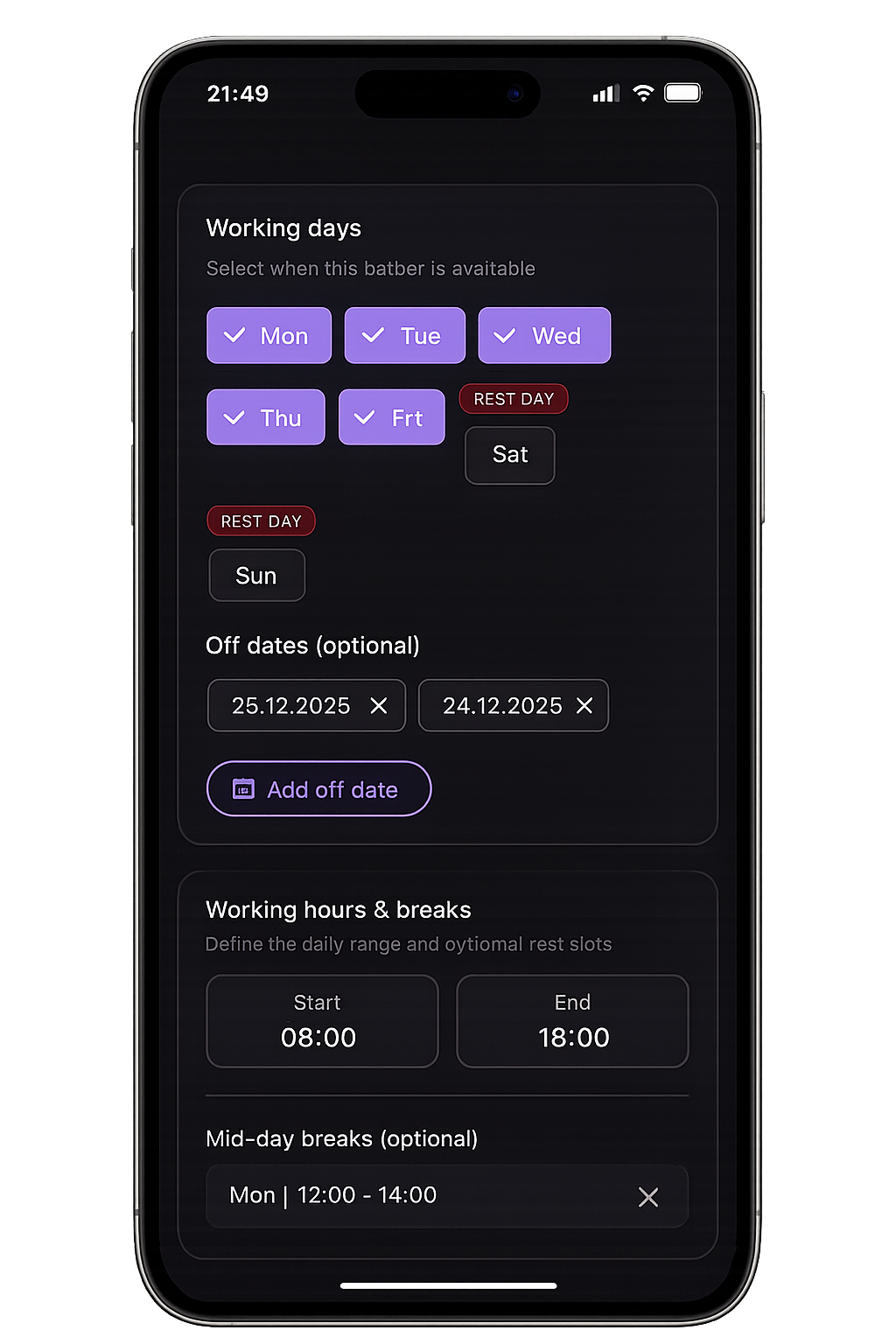
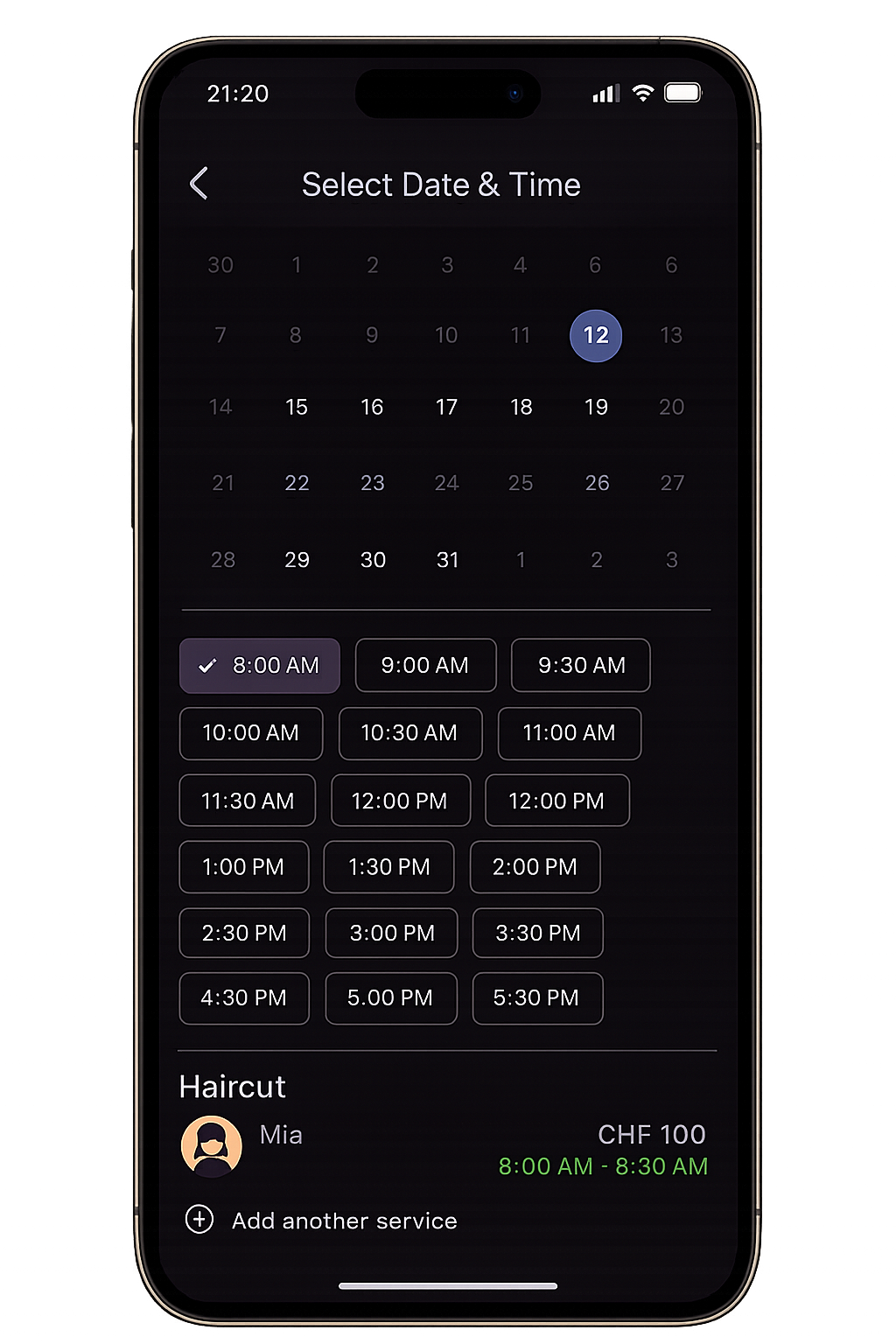
Admin + user
Admin controls on the left. Client booking on the right.
Your team manages availability, buffers, and approvals in the Admin app, while clients book and manage visits in the User app. Both stay fully on-brand.
How a branded salon app helps manage peak hours 📱
A branded salon app lets you set booking rules, buffers, and service availability so peaks stay controlled.
Clients see real-time options, get steered to off-peak slots, and receive clear expectations about timing and policies.
SalonApp, for example, keeps your booking logic, buffers, and notifications in one beauty salon appointment management experience so staff load stays balanced.
Push notifications and in-app waitlists move clients into cancellations quickly, filling gaps without overloading peak windows.
Because the rules live in the app, every client sees the same availability and policies—reducing debates at the desk and keeping expectations aligned.
Frequently Asked Questions ❓
What are peak hours for beauty salons?
Often evenings (4–8pm) and weekends, but it varies. Check your booking data to see when waits, overtime, or redos increase.
How do salons handle busy times efficiently?
Set booking caps for complex services, stagger start times, enforce buffers, and steer clients to off-peak options. Use one live calendar to avoid overlaps.
Should salons limit bookings during peak hours?
Yes, for complex services. Limiting high-effort bookings and promoting off-peak alternatives protects quality, staff health, and client experience.
Conclusion 🎯
Mastering how to manage peak hours in a beauty salon is about shaping demand, not just working harder. Control availability, spread load, and guide clients to the best times.
Use clear rules, real-time visibility, and a branded salon app to keep peaks profitable without burning out your team. Proactive scheduling beats reactive firefighting.
Start now with one change—like capping complex services in your busiest window—then add buffers and off-peak incentives. Small steps compound into calmer, more profitable peaks.