
Communication
People Book and Never Reply to Salon Messages: Why It Happens and What to Do 💬
You send confirmations and reminders, but clients stay silent. It feels disrespectful, yet most silence comes from friction in the process—too many messages, unclear next steps, or replies that take effort.
People book and never reply to salon messages when communication is scattered, replies take effort, and rescheduling is harder than ignoring. Fix it with one clear confirmation at booking, well-timed reminders, one-tap confirm/reschedule links, and a consistent flow that reduces salon communication problems and no-shows while lifting response rates.
Clients are not trying to ghost you; they are juggling crowded inboxes and busy days. If your messages feel like work, they get skipped. Simplify the path to “yes” or “move this,” and responses climb while salon no-shows fall.
Remember, the primary keyword—people book and never reply to salon messages—describes a process issue, not rude behavior. Focus on removing friction, and the silence usually disappears.
Why people book appointments and then stop replying 📅
Too many messages from different channels: email, SMS, and DMs pile up, and clients do not know which one to answer.
Messages that require effort to respond: if confirming means calling back or logging in, clients postpone.
Unclear next steps: vague reminders without a confirm/reschedule action lead to paralysis and silence.
Clients planning to decide later: they book to hold a spot but delay committing when life is uncertain.
Overly long messages: walls of text get skipped; concise prompts with a button convert better.
First-hand insight: when we reduced three messages to one concise SMS with a confirm/reschedule button, response rates jumped within a week.
Why chasing clients with messages doesn’t work 💬
Repeated texts and calls feel spammy and get filtered or muted. Each follow-up lowers trust.
Staff stress rises as they juggle calls instead of serving guests in the salon.
Inconsistent tone across team members confuses clients; they stop replying because the brand feels disjointed.
Manual follow-ups are slow. By the time someone answers, the schedule has already drifted.
Operational drag: every five-minute chase call steals time from arrivals, checkout, and retail recommendations.
How silence affects salon operations and revenue 💰
Schedule reliability drops: the calendar looks full, but unconfirmed slots are risky.
Staff planning suffers: stylists and front desk cannot predict workload or prep materials confidently.
Revenue predictability weakens: silent clients convert to no-shows, shrinking daily totals.
Client experience erodes: last-minute gaps or rushes create uneven service quality and fewer rebooks.
Step-by-step ways to reduce unanswered salon messages ✅
Clear confirmation at booking: send one concise message with date, time, location, stylist, and policy highlights.
One-tap confirmation instead of replies: make “confirm” or “reschedule” a button, not a conversation. Mobile-first links beat voicemail.
Fewer, more intentional messages: replace multiple nudges with a 24h reminder plus a same-day nudge timed to the commute window.
Easy rescheduling links: let clients move the slot without calling. Moving is better than ignoring.
Consistent communication flow: same templates, tone, and timing across every client train predictable behavior.
Channel clarity: pick a primary channel for confirmations (SMS/push) and use email for details. Avoid scattering across DMs.
Light commitment: deposits or card-on-file raise show-up and reply rates when clearly stated at booking.
Right-length messages: keep confirmations short, with a single call to action. Long messages get skimmed and skipped.
Sender identity and tone: use a clear salon name, consistent voice, and friendly brevity so clients trust the tap-to-confirm link.
Measure and adjust: track response rates by channel and timing; shift send windows until reply rates stabilize above your target.
Operational insight: salons that standardized to two messages (24h and same-day with one-tap actions) saw reply rates climb past 90% and reduced salon no-shows without extra staff time.
Operational tip: test your own flow weekly on your phone. If you would ignore it, clients will too—simplify further.
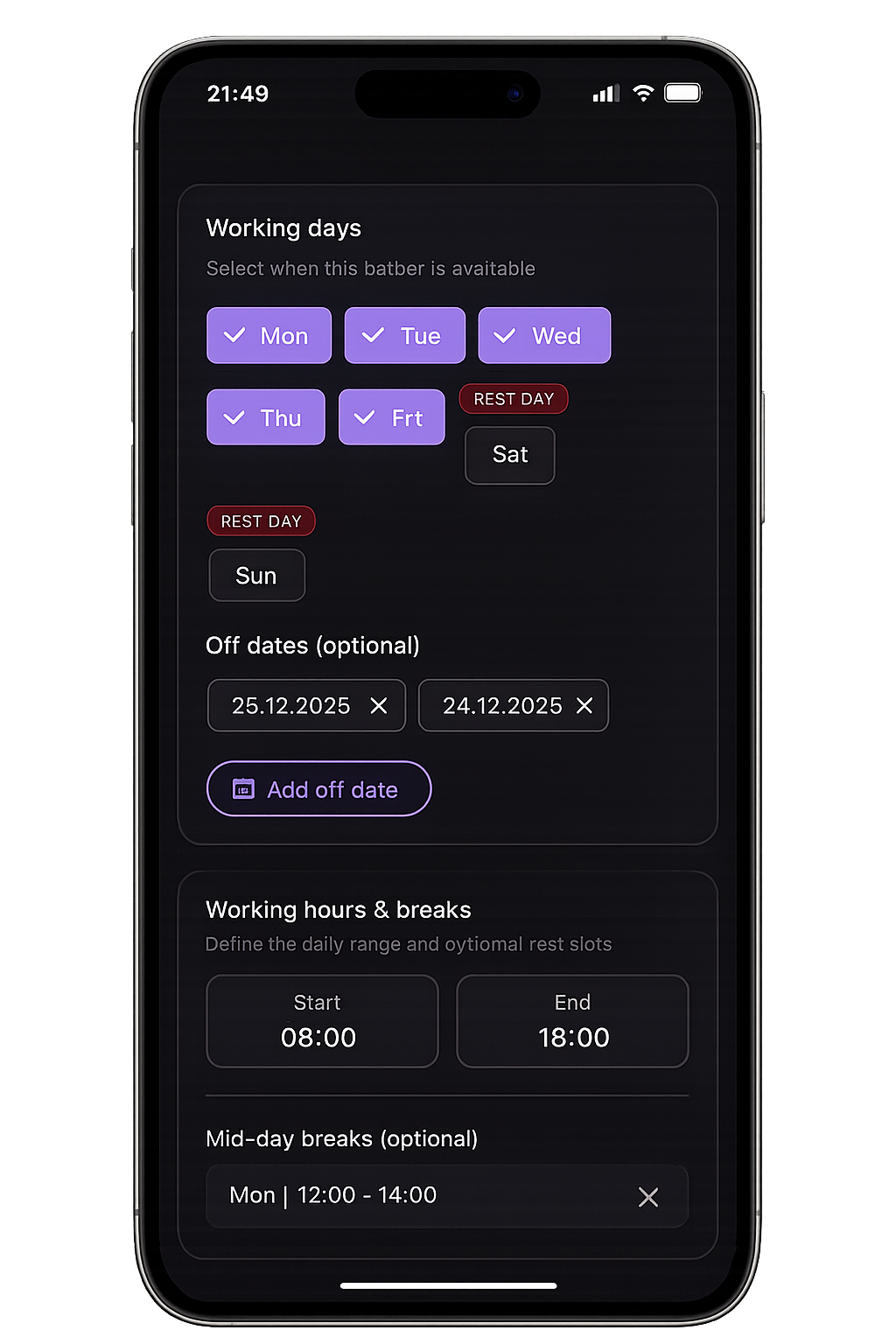
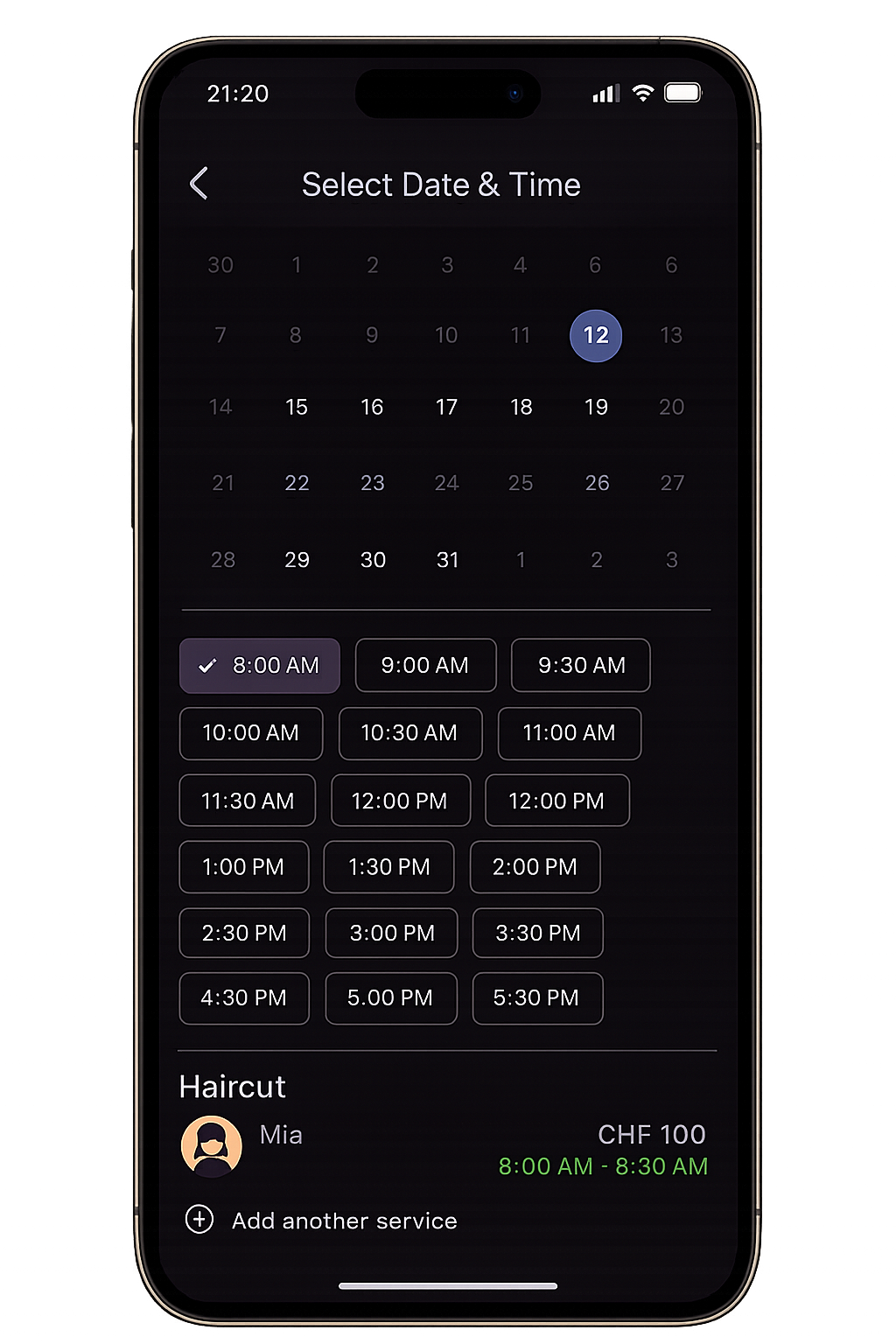
Admin + user
Admin controls on the left. Client booking on the right.
Your team manages schedules, approvals, and offers in the Admin app, while clients book and manage visits in the User app. Both stay fully on-brand.
How a branded salon app reduces message silence 📱
A branded app centralizes communication so clients see one source of truth instead of scattered messages.
Push notifications carry confirmations and reminders with one-tap responses, cutting friction.
In-app rescheduling and policies reduce back-and-forth and keep expectations clear.
SalonApp, for example, provides a branded salon app that unifies booking, reminders, and updates so clients respond faster and staff avoid manual chasing.
Because the flow is consistent, clients learn to act the same way every time—reducing silence and protecting your schedule.
Self-serve changes inside the app make rescheduling feel easy, which keeps the calendar accurate and reduces appointment confirmation issues.
Push and in-app messaging also bypass crowded email tabs, so clients see the prompt at the right moment and act.
Frequently Asked Questions ❓
Why do clients ignore salon messages?
Messages are scattered, require effort to answer, or lack a clear action. Simplify to one-tap confirm/reschedule and use a single primary channel to cut friction.
How can salons get clients to respond?
Send a clear confirmation at booking, use well-timed reminders, and provide one-tap options. Make responding easier than ignoring, and keep tone consistent.
Are automated messages better than manual ones?
Yes. Automated, branded messages ensure consistent timing, clear actions, and fewer errors. They reduce staff workload and improve response rates compared to manual chasing.
Conclusion 🎯
People book and never reply to salon messages when communication is noisy or hard to act on. Simplify, centralize, and offer one-tap actions to turn silence into confirmations.
Rely on clear systems instead of chasing replies. You will reduce appointment confirmation issues, protect revenue, and keep the day predictable for your team and clients.
Internal link ideas: connect to guides on reminder timing, no-show reduction, and branded app benefits using anchor text like reminder playbook, no-show reduction checklist, and branded app advantages.