
Technology
Salon App vs Generic Booking Tools: What’s the Real Difference? 📅
Most salons start with generic booking tools because they are quick to launch. As the business grows, questions appear: are generic tools enough, or is a branded salon app worth it? This breakdown shows the trade-offs so you can decide based on your goals.
Comparing a salon app vs generic booking tools is about ownership, control, and client experience. The right choice depends on how you drive bookings, retain clients, and present your brand.
Generic booking software helps you get online fast, but speed is not the same as strategy. A branded salon booking app can become part of your client experience, not just a utility. The decision affects how visible your brand is, how you handle policies, and how easily clients rebook.
For salon owners balancing payroll, inventory, and client expectations, the technology choice should reduce noise, not add it. Use this guide to weigh the practical differences between a beauty salon booking system you own and a tool you borrow.
What generic booking tools do well 📅
Fast setup with minimal training—teams can start booking in a day. That speed matters when you are opening a location or replacing pen-and-paper calendars.
Low upfront cost or freemium models reduce risk for new or small salons. You can defer a bigger investment until you know your client volume and service mix.
Basic online booking, reminders, and simple staff assignment cover essential functionality. Most generic tools include calendar sync, email confirmations, and SMS reminders.
Shared platforms bring some discovery if they have marketplaces or directories. Being listed next to other providers can generate first-time bookings when you have no brand awareness.
Neutral branding can work if you rely on price or convenience rather than differentiation. If your strategy is volume and speed, a generic interface may be good enough.
Operationally, generic booking software can provide quick wins: fewer phone calls, fewer double bookings, and basic reporting on appointment counts. For owners who want a light lift, this is appealing.
Where generic booking tools fall short for salons 📅
Branding limits: your logo and colors are often secondary to the platform’s look and feel. The experience reminds clients they are using someone else’s product, not your brand.
Weaker client retention: clients may browse competitors in the same marketplace or receive cross-promotions. The platform’s incentives are not always aligned with your repeat-visit goals.
Limited control over experience: service order, buffers, deposits, or approval rules may be constrained by the platform. When you cannot tune prep time or post-service cleanup, staff time gets squeezed.
Shared environment: data lives alongside other businesses; clients can be tempted away. If the marketplace highlights “similar salons nearby,” you subsidize competitor visibility.
Less ownership of communication: reminder tone and timing may be fixed, reducing your ability to shape the experience. If you want to send pre-visit prep, allergy checks, or retail follow-ups, options may be limited.
Reporting depth can be thin. You might see total bookings but not retention by stylist, prebook rate, or retail attachment rate. Without visibility, it is harder to coach the team.
Generic booking tools also make price changes and policy enforcement harder. If deposits or late cancel fees are not configurable, you eat the cost of no-shows and last-minute gaps.
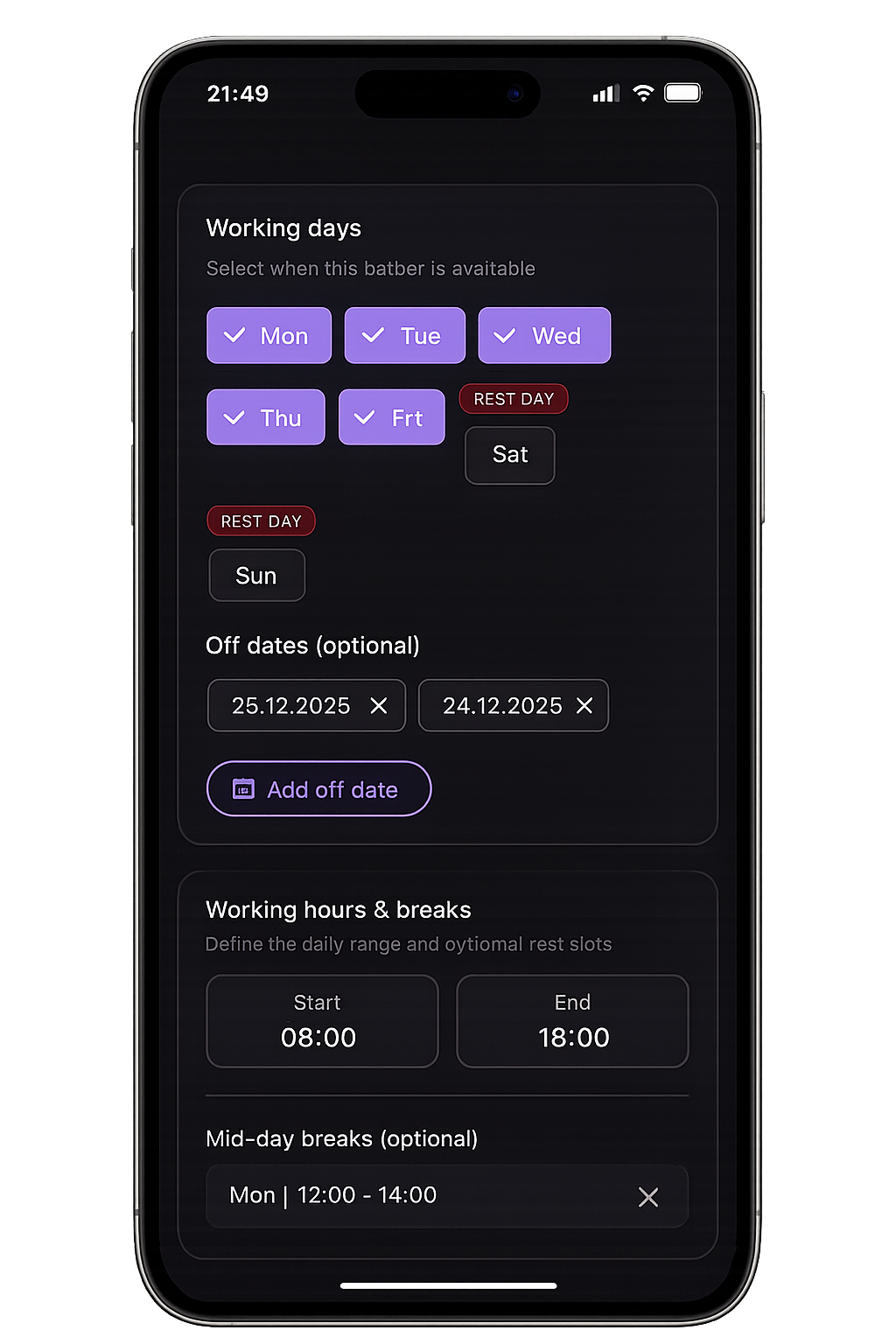
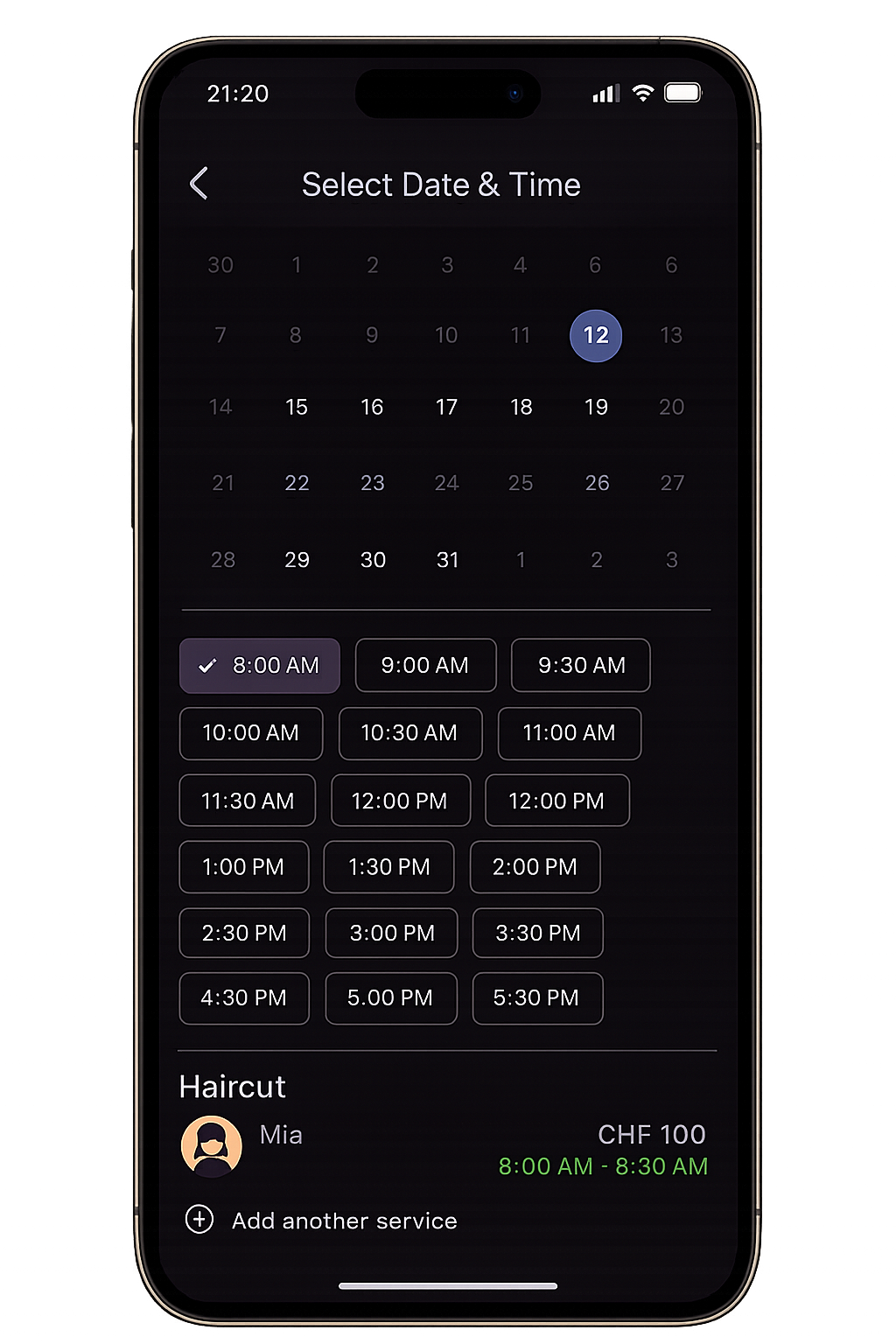
Admin + user
Admin controls on the left. Client booking on the right.
Your team manages schedules, approvals, and offers in the Admin app, while clients book and manage visits in the User app. Both stay fully on-brand.
How a branded salon app is different 📱
You own the client journey end-to-end—branding, flow, and policies reflect your salon. The salon booking app looks and feels like you, not like a generic dashboard.
Clients keep your icon on their home screen, boosting visibility and repeat visits. Every time they unlock their phone, your brand is present.
Rebooking and retention improve because clients return directly to your app, not a shared marketplace. You reduce leakage to competitors and keep attention on your offers.
Booking logic (buffers, approvals, deposits) matches how you operate, not a generic template. You can enforce consultation-before-color, add blowout buffers, or require deposits for peak times.
Integrated notes and preferences stay within your brand environment, reducing errors. Stylists see color formulas, contraindications, and retail history in one place.
Push notifications and in-app messaging feel like a service, not spam. You can segment by service history, offer targeted rebooking nudges, and keep tone on-brand.
Because the beauty salon booking system is yours, you set the privacy standard. Clients trust that data is used to improve their visits, not to market competing salons.
Key differences between salon apps and generic booking tools 📅
Branding and visibility: Branded salon apps keep your name up front on the home screen. Generic booking tools often prioritize their own brand and marketplaces, diluting yours.
Client experience: Tailored flows, saved preferences, and consistent tone feel bespoke. Standardized, shared experiences can feel transactional and interchangeable.
Booking control and flexibility: Custom buffers, deposits, approvals, and service rules protect quality and schedule integrity. Generic booking software limits how precisely you can model real-world timing.
Long-term retention: Direct rebooking, push reminders, and loyalty prompts inside your app keep clients returning. Marketplaces expose clients to competitor listings at the moment of booking.
Business differentiation: A branded salon app signals professionalism and stability. Generic tools can make salons look interchangeable, especially to new clients comparing options.
Data and reporting: Owned apps give richer views—retention by stylist, rebooking rate, product attachment, and campaign lift. Generic tools often give aggregate counts without actionable detail.
Promotions and memberships: Branded apps can target VIPs, sell packages, or push add-ons at the right moment. Generic platforms may restrict offer types or require broad discounts.
When a branded salon app makes sense 📱
Appointment-heavy salons with repeat clients and measurable no-show or rebooking goals. If you track prebook rate or retention by stylist, a branded app supports those metrics.
Brands competing on experience, not price, that need consistent presentation and policies. Luxury or boutique salons win when every touchpoint feels intentional.
Salons wanting to shape demand—steer to off-peak times, manage buffers, or require deposits. Control lets you protect peak revenue and keep staff utilization balanced.
Teams that need one source of truth for availability, notes, and communications. Unified data reduces scheduling conflicts and improves service quality.
Multi-location owners that want consistency across sites. A single branded app keeps services, pricing, and policies aligned while routing clients to the right location.
Salons investing in retention and lifetime value. If your marketing budget already funds SMS or email, directing clients into a branded salon app amplifies that spend.
SalonApp, for example, provides a branded salon booking app with your colors, policies, and reminders so clients book faster and stay loyal.
Frequently Asked Questions ❓
Are generic booking tools enough for salons?
They can be for simple, low-volume operations or heavy walk-in models. As complexity, brand needs, or retention goals grow, limitations surface.
What’s the main benefit of a salon app?
Ownership of the client experience—branding, booking logic, reminders, and rebooking—all in your controlled environment, which lifts retention and perceived professionalism.
Can salons switch from generic tools easily?
Yes. Export clients, set up services/durations/buffers, and run both briefly during transition. Communicate via email/SMS to invite clients to the new app.
Plan the switch with a two-week overlap: keep generic booking open for existing appointments while directing new bookings into the branded app. Use in-salon signage, links on your website, and post-appointment emails to guide the change.
Segment VIP clients first so they experience the new flow and provide feedback. Train staff on how to handle edge cases—group bookings, color corrections, or prepaid packages—before turning off the old system.
Conclusion 🎯
Choosing between a salon app vs generic booking tools depends on whether you need differentiation, control, and stronger retention. Generic tools are fine for basics; branded apps pay off when branding, experience, and rebooking matter.
Pick the tool that supports long-term growth: the one that keeps clients loyal, simplifies booking, and reflects your brand every time they schedule. Link your decision to your strategy—if you emphasize premium service and repeat business, a branded salon app is the logical next step.
For internal links, connect this topic to pages about online booking setup, brand consistency, and your technology stack so owners can dig deeper without leaving your site.