
Booking
Salon Booking App vs Phone Booking: Which One Actually Works Better? 📅
Phone booking has been the default for decades, but client expectations and staff workloads have changed. Salon owners now ask whether a salon booking app or phone booking delivers the best mix of convenience, control, and reputation protection.
A salon booking app outperforms phone booking for convenience, after-hours scheduling, and reducing missed calls. Phone booking still helps for complex services and consultations, but apps handle confirmations, reminders, payments, and policy enforcement automatically, freeing staff time, cutting no-shows, and keeping a consistent client experience.
Salon phone booking still offers warmth and nuance. Yet beauty salon booking systems now provide the speed, accuracy, and 24/7 access clients expect. The right mix depends on your services, volume, and how much admin load you want your team to carry.
Reputation is on the line with every booking method. Clients judge responsiveness, policy clarity, and whether they can self-serve quickly. That is why salon booking app vs phone booking is now a strategic decision, not just a convenience question.
How phone booking works in salons 📅
Phone booking relies on staff availability, paper notes, or a desktop calendar to secure slots. It offers a personal touch, but it interrupts services and front-desk flow.
Pros: Human nuance, upsell opportunities, and the ability to triage complex requests. Clients feel heard when they have unusual needs.
Cons: Missed calls, voicemail backlogs, and manual data entry. Every call pulls staff off the floor, increasing wait times and risking errors.
Hidden costs: Staff context-switching slows checkouts and reduces retail attachment. You also need more front-desk coverage to keep up with peaks.
Operational risk: Double-bookings or misheard times lead to late starts and negative reviews. I’ve seen Saturday stacks happen because one call wasn’t logged.
Client perception: If lines are busy or calls go unanswered, clients may assume the salon is disorganized—or switch to a competitor with online booking for salons.
How salon booking apps work 📅
A salon booking app presents real-time availability, service durations, and staff options. Clients book on their own device, choose add-ons, and confirm instantly.
Automated confirmations, reminders, and reschedule links reduce no-shows. Payments or deposits can be captured during booking to secure the slot.
Staff see synced calendars, client notes, contraindications, and policies in one place. Fewer interruptions mean front-desk teams can focus on arrivals and in-salon service quality.
First-hand insight: salons that map services to accurate durations in their beauty salon booking system cut back-to-back delays and avoided awkward lobby waits.
First-hand insight: after adding app-based self-booking with deposits, one salon cut weekend no-shows by nearly half and shifted calls to high-value consultations instead of basic rebookings.
Key differences between booking apps and phone booking 📅
Convenience for clients: Apps provide 24/7 access and self-service. Phone booking requires matching business hours and call volume.
Time spent by staff: Apps reduce call handling and manual entry. Phone booking keeps staff on the phone, limiting time for guest care.
Missed calls and no-shows: Apps eliminate busy signals and automate reminders, cutting missed appointments. Phone systems often lose bookings to voicemail or abandonment.
Booking outside business hours: Apps capture late-night and early-morning bookings. Phone booking misses these unless you staff extended hours.
Overall efficiency: Apps centralize availability, deposits, and policies. Phone booking is flexible but prone to errors when multitasking.
Data accuracy: Apps store client history and preferences reliably. Phone notes can be incomplete, leading to service mistakes that damage trust.
When phone booking still makes sense 📅
Complex color corrections, bridal trials, or medical-adjacent services often need human screening. A call allows staff to set expectations on time, pricing, and prep.
High-touch VIP clients may prefer a direct line. Keeping a phone option maintains relationship equity while still routing routine bookings to digital.
When Wi-Fi or cellular coverage is poor in your area, phone backup prevents lost bookings. It also helps older clients who are less comfortable with apps.
Operational tip: limit phone booking to defined cases. Publish which services require a call so clients know why you’re asking for it.
When a salon booking app is the better choice 📅
Routine services, repeat clients, and peak-hour demand benefit most from automation. Clients want speed and certainty; staff need fewer interruptions.
Deposit and card-on-file workflows enforce policies without uncomfortable calls. Automated reminders and reschedule links reduce no-shows.
For multi-location salons, an app keeps availability accurate across sites and prevents cross-location double-booking.
Brand consistency is easier: the app uses your visuals, tone, and policies every time. SalonApp, for example, delivers a branded salon booking app that keeps your look and rules in front of clients while streamlining the flow.
First-hand insight: a salon that moved 70% of bookings into its app reduced average call volume by an hour per day, freeing staff to greet guests and retail recommendations more effectively.
Pricing transparency improves: apps display add-ons and duration changes, so clients see why a slot costs more. That reduces price disputes and speeds checkout.
Hybrid strategy: keep a monitored line for edge cases, but direct all standard services to the app with clear links in SMS, email, and social bios.
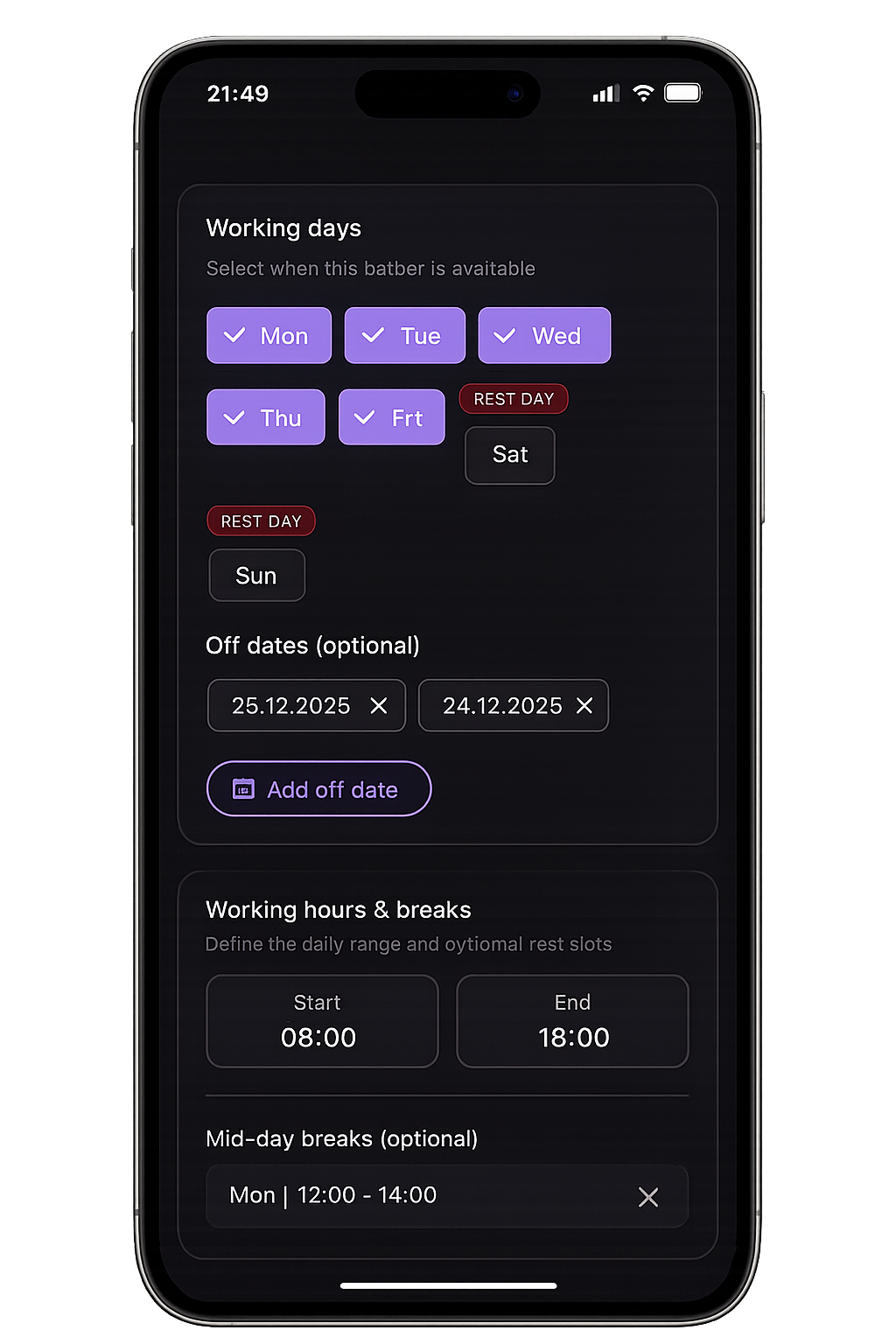
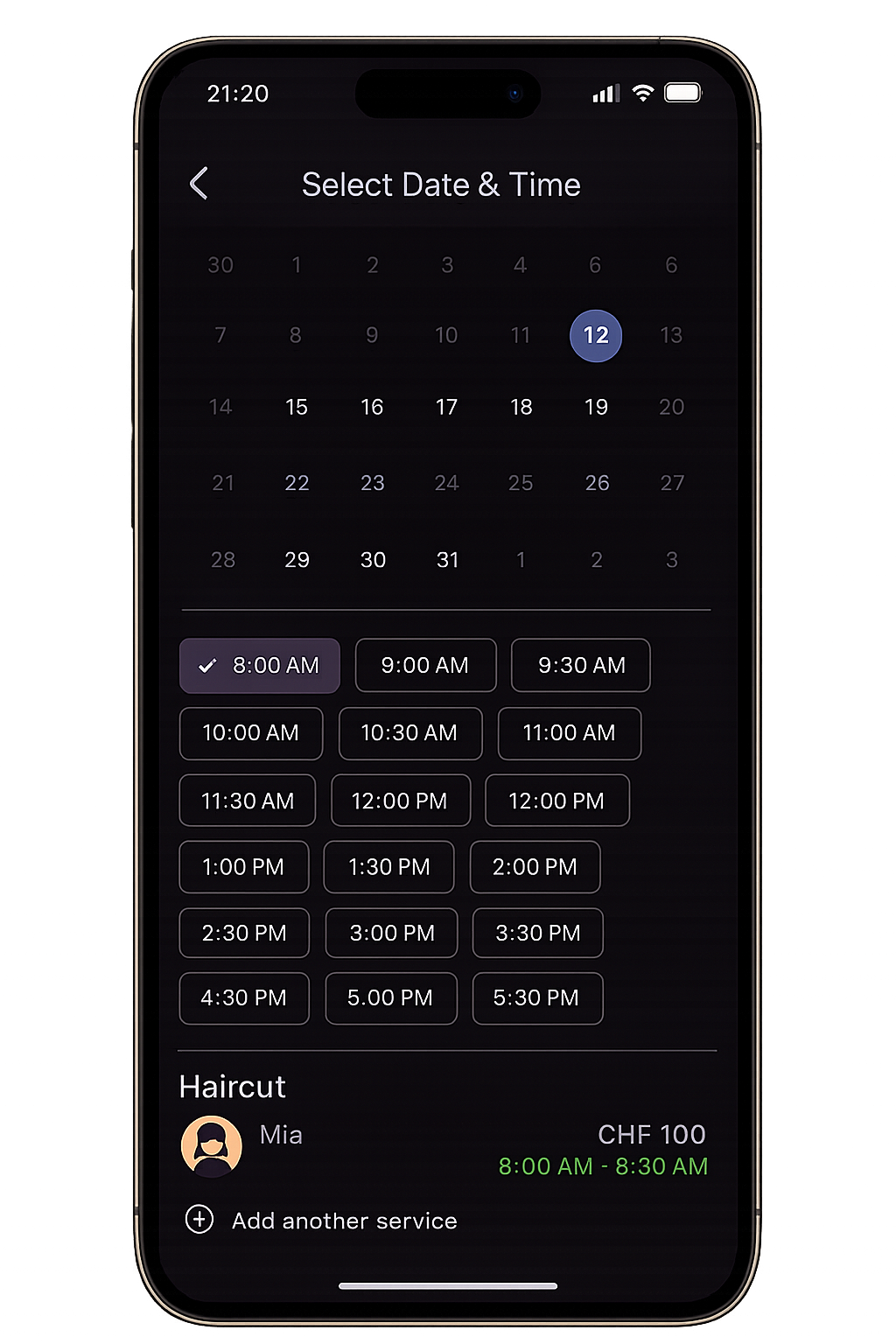
Admin + user
Admin controls on the left. Client booking on the right.
Your team manages schedules, approvals, and offers in the Admin app, while clients book and manage visits in the User app. Both stay fully on-brand.
Frequently Asked Questions ❓
Is phone booking outdated for salons?
Not entirely. Phone booking is still useful for complex services and VIPs, but relying only on calls limits convenience and increases errors. Pairing a phone option with an online booking for salons setup covers both preferences.
Do clients prefer booking apps?
Most clients prefer a salon booking app for speed, 24/7 access, and instant confirmation. They still value a phone line for nuanced questions, but default to apps when they already know what they want.
Can salons use both phone booking and apps?
Yes. Many salons keep phone booking for edge cases and steer routine services to their beauty salon booking system. This hybrid approach keeps flexibility while reducing missed calls and no-shows.
Conclusion 🎯
Phone booking delivers human nuance, but salon booking apps win on convenience, accuracy, and after-hours capture. The best setup is intentional: keep a phone path for complex cases and let an app handle everything else.
Choose booking methods that support growth and efficiency. If calls feel like a bottleneck, shift routine traffic to your app and reserve the phone for the moments that truly need a conversation.
Internal link ideas: connect to your guides on online booking setup, deposit policies, and reducing no-shows using anchor text like online booking checklist, deposit policy template, and reminder playbook.