
Scheduling
Salon Calendar Looks Full but the Day Feels Empty: What’s Really Going On 📅
A fully booked calendar should mean a bustling salon, yet some days feel slow, revenue lags, and staff wait between clients. The disconnect is real—salon scheduling problems hide inside the calendar, making empty time slots look invisible until the day drags on.
When a salon calendar looks full but the day feels empty, hidden gaps, late cancellations, and poor slot alignment create dead time. Fix it by tightening service durations, enforcing confirmations, adding smarter buffers, and using real-time availability so bookings reflect actual chair capacity and reduce salon calendar gaps.
Seeing a packed view but hearing silence in the salon is frustrating. It usually comes from calendar settings that overpromise, last-minute changes, and inefficient time slot structures. The good news: small adjustments to booking rules and reminders can turn an “empty” full day into steady, profitable flow.
Why a full salon calendar can still feel empty 📅
Hidden gaps between appointments: five minutes here, ten minutes there, and unmatched service lengths create patches of unusable time.
Late cancellations and no-shows: calendar rows stay filled until the last minute, leaving no chance to backfill.
Poor time slot alignment: stacking services without realistic durations or cleanup buffers causes idle time while staff reset or wait.
Overly optimistic booking views: calendars that show soft holds or unconfirmed bookings as “busy” mislead the team about true utilization.
First-hand insight: salons that color-code confirmed vs tentative bookings see gaps clearly and react faster when a client cancels.
How scheduling inefficiencies create invisible downtime 🛠️
Small gaps compound: three ten-minute gaps across stylists equals a full service slot lost every few hours.
Buffers are inconsistent: when one stylist adds a 15-minute cleanup and another adds none, the front desk struggles to align starts, leading to uneven flow.
Prep and checkout time are ignored: if the calendar counts only service duration, real turnover time creates unplanned idle periods.
Manual reshuffling is slow: by the time staff spot a gap, the client who could have filled it has booked elsewhere.
Walk-ins and add-ons get blocked: poorly structured schedules leave tiny windows that cannot accept profitable add-on services.
The real cost of “empty” full days 💰
Daily revenue: every unusable gap reduces average ticket per hour, even when the day “looks” full.
Staff utilization: stylists lose rhythm and retail opportunities when idle pockets break momentum.
Client experience: rushed starts after delays or long waits between steps erode trust and lead to fewer rebooks.
Long-term profitability: calendar inefficiency lowers capacity during peak demand, pushing clients to competitors and shrinking lifetime value.
Brand perception: if clients see an empty salon after being told you are “fully booked,” credibility drops.
Step-by-step ways to fix empty days with full calendars ✅
Smarter time slot structuring: set realistic service durations and standardized cleanup buffers by service type to eliminate micro-gaps.
Better control over booking rules: require deposits or card-on-file for peak times, and block last-minute soft holds that inflate the calendar.
Automated confirmations and reminders: send instant confirmations plus 24h and day-of reminders with easy confirm/reschedule links to cut no-shows.
Easier rescheduling instead of cancellations: give clients a self-serve link to move bookings; recovering the slot beats chasing new clients by phone.
Clear visibility into real availability: separate confirmed from tentative bookings in the view so staff can fill gaps quickly.
Align services to block sizes: match popular services to consistent 30/45/60-minute blocks so stacking stays clean.
Stagger starts: offset stylists by 10 minutes to reduce checkout bottlenecks and keep chairs rotating smoothly.
Use waitlists effectively: automatically offer newly opened slots to waitlisted clients in order, starting with highest lifetime value.
Measure show-up rate by channel: if phone bookings no-show more than app bookings, steer traffic to the most reliable channel.
Operational insight: after aligning service blocks to 45/60 minutes and enabling auto-waitlist offers, one salon filled 6–8 extra slots weekly without adding hours.
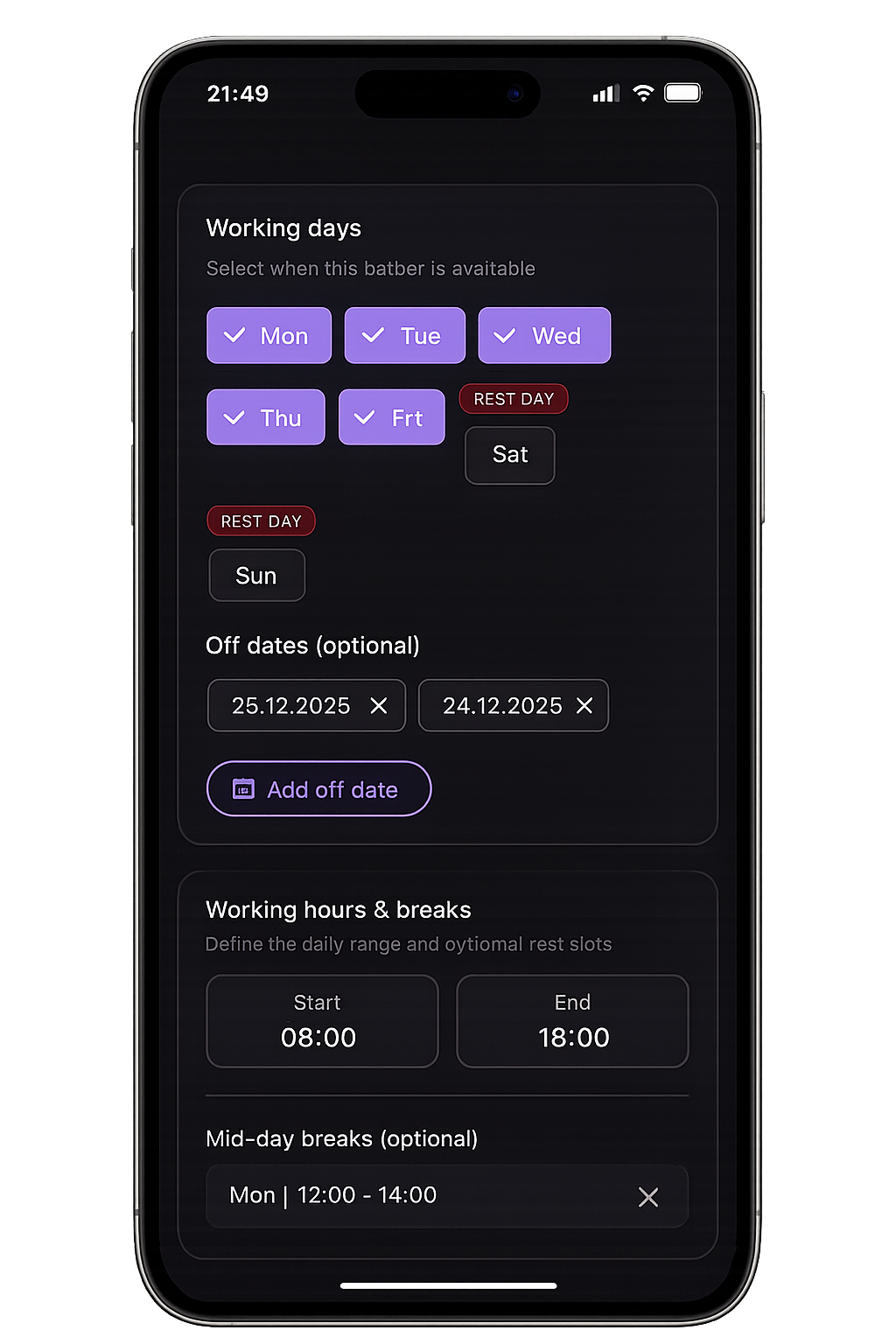
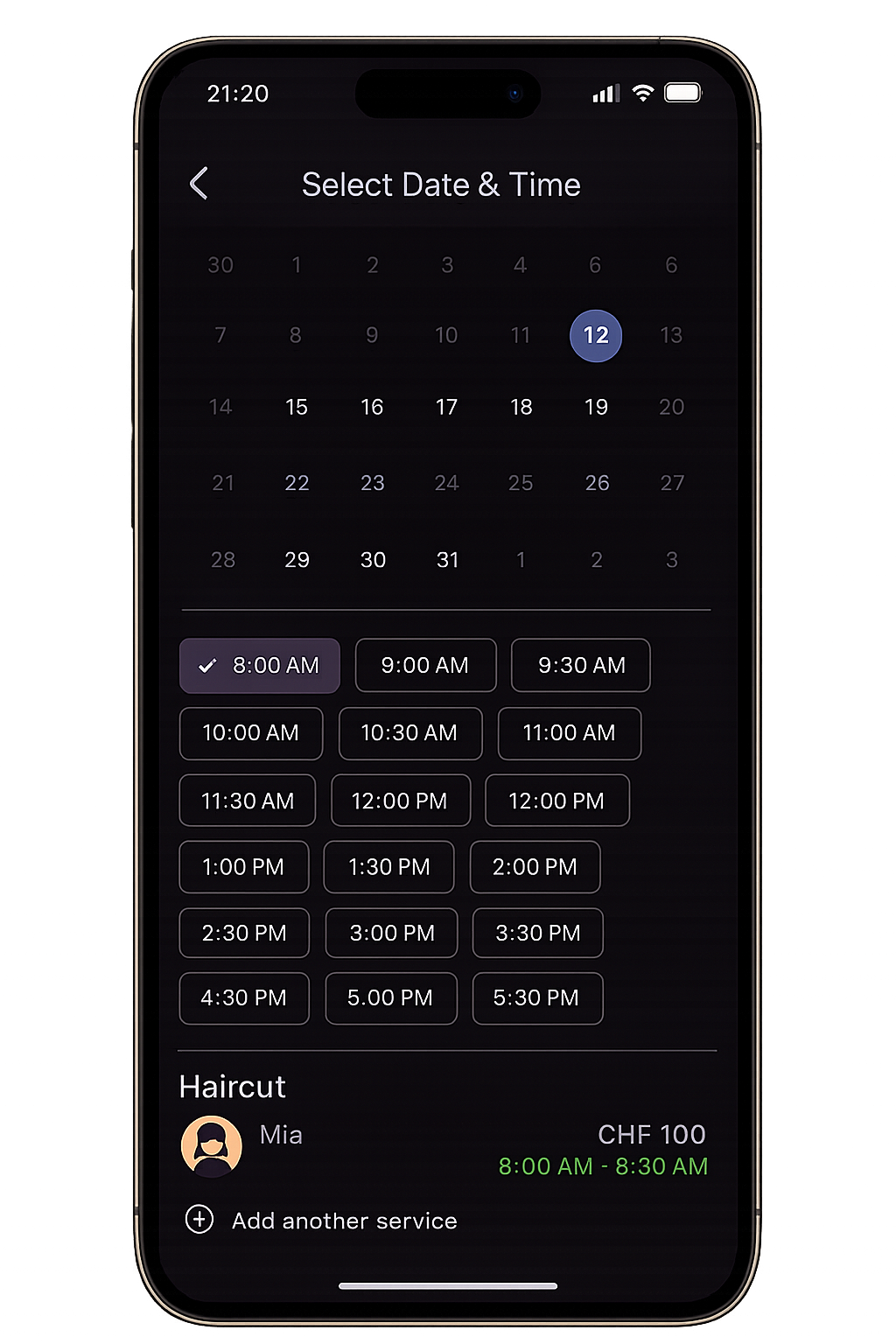
Admin + user
Admin controls on the left. Client booking on the right.
Your team manages schedules, approvals, and offers in the Admin app, while clients book and manage visits in the User app. Both stay fully on-brand.
How a branded salon app improves calendar efficiency 📱
A branded app shows real-time availability and enforces accurate durations, reducing the chance of mismatched services creating gaps.
Push reminders keep clients on time and encourage rescheduling instead of disappearing, so calendar gaps stay visible and fillable.
Self-serve add-ons and deposits ensure bookings reflect true time and value, not optimistic estimates.
SalonApp, for example, provides a branded salon app that keeps your policies, durations, and buffers consistent so bookings match real capacity and days stay productive.
Consistent digital flow across every client reduces variance: the more uniform the inputs, the fewer invisible gaps appear.
Frequently Asked Questions ❓
Why does my salon calendar look full but revenue is low?
Hidden gaps, late cancellations, no-shows, and optimistic durations make calendars look full while chairs sit idle. Align service times, enforce confirmations, and improve reminders to turn bookings into real revenue.
How do salons reduce empty gaps in schedules?
Standardize service blocks, add realistic cleanup buffers, separate tentative from confirmed bookings, and use waitlists with automated offers. These steps tighten the grid and convert small gaps into usable time.
Can better scheduling increase daily income?
Yes. Cleaner blocks, reliable reminders, and easy rescheduling increase show-up rates and chair utilization, lifting revenue without longer hours. Better scheduling converts a “full” calendar into a full day.
Conclusion 🎯
A salon calendar looks full but day feels empty when gaps, no-shows, and unrealistic durations hide inside the schedule. The calendar is a mirror of rules, buffers, and confirmations—fix those, and the day fills up.
Optimize schedules, not just slots. Use consistent durations, strong reminders, and a branded app so bookings match real capacity and revenue catches up with your calendar.
Internal link ideas: connect to guides on scheduling efficiency, no-show reduction, and deposit policies using anchor text like scheduling playbook, no-show reduction checklist, and deposit policy template.