
Retention
Why Salons Lose Clients to Competitors Nearby (And How to Stop It) 😓
Few things are more frustrating than seeing familiar clients stop booking. Often the work was good. Clients usually leave quietly, choosing a nearby salon that feels easier, faster, or more attentive between visits.
Salons lose clients to competitors nearby when booking is inconvenient, reminders are weak, and the experience feels inconsistent. Clients rarely complain—they quietly switch to easier options. Fixing booking, communication, and on-brand consistency closes the gap and reduces salon client churn.
Understanding why salons lose clients to competitors nearby is about friction. When local alternatives make booking effortless, communicate clearly, and stay visible between visits, clients drift—without drama or feedback. Retention is earned in the small moments, not just in the chair.
Owners often look at quality first, but data shows churn usually starts in the booking flow. Small delays and unclear policies cause more departures than technical service issues.
The most common reasons salons lose clients locally ✨
Inconvenient booking: only phone calls, limited hours, or slow responses push clients to online-first competitors.
Missed or forgotten appointments: weak reminders lead to no-shows and awkward rescheduling that erodes trust.
Poor communication: unclear prep notes, policy surprises, or late replies make the experience feel unreliable.
Inconsistent experience: variable timing, different greetings, or uneven service quality make clients feel unsure.
Easier alternatives nearby: another salon offers faster booking, clearer pricing, or more predictable timing.
First-hand insight: when we mapped churn for a city salon, 70% of lost clients had booking friction notes—slow responses or hard-to-find slots—before they switched.
Perceived disorganization is another trigger. If receipts, reminders, and policies look mismatched, clients assume the back-end is messy and try another salon.
Why clients rarely complain before switching salons 😓
Most clients avoid confrontation. It feels easier to “try somewhere else” than to give feedback.
Convenience is a quiet decider. If another salon is simpler to book, clients move without a conversation.
Micro-frustrations add up: a missed reminder, a late start, or a policy surprise nudges them to test another option.
Clients assume small issues will repeat. Rather than hope for change, they pick a competitor who appears more organized.
Silence is not satisfaction—clients often leave without warning because they believe switching costs are low.
Small gaps that push clients to nearby competitors ✨
Hard-to-book appointments: no online booking, limited peak slots shown, or slow DMs lead clients to faster options.
Lack of reminders: missed confirmations and prep notes create anxiety about timing or service readiness.
No strong brand presence: off-brand messages or generic marketplaces make the salon feel interchangeable.
Feeling “forgotten” between visits: no check-ins, no post-care notes, and no rebooking prompts signal indifference.
Inconsistent policies: uneven enforcement of deposits or late cancels erodes trust and predictability.
Data gap: when notes and preferences are scattered, clients repeat themselves and feel the process is amateur.
Location alone is not enough. Clients will walk past a closer salon to one that feels organized and respectful of their time.
How salons can reduce client loss to competitors 🛠️
Make booking effortless: Offer self-serve booking with accurate durations, buffers, and real-time availability. Keep peak slots for loyal clients.
Improve communication and reminders: Automated confirmations plus 48h/24h reminders with prep notes and easy reschedule links reduce missed salon appointments.
Stay visible between appointments: Send tailored follow-ups—care tips, product guidance, and rebooking nudges—so clients feel guided, not sold.
Create a consistent, professional experience: Standardize greetings, consultations, timing, and rebooking asks. Consistency builds trust more than sporadic discounts.
Protect policies with clarity: Publish deposits, cancel windows, and grace periods up front. Predictability feels premium and discourages casual no-shows.
Operational tip: audit churn by cohort—new vs. repeat. If new clients drop after visit one, tighten onboarding: confirmations, prep, timing, and post-care must be flawless.
Front-desk script: when clients call to change, offer two new times and send a confirmation immediately. The fast response often prevents silent churn.
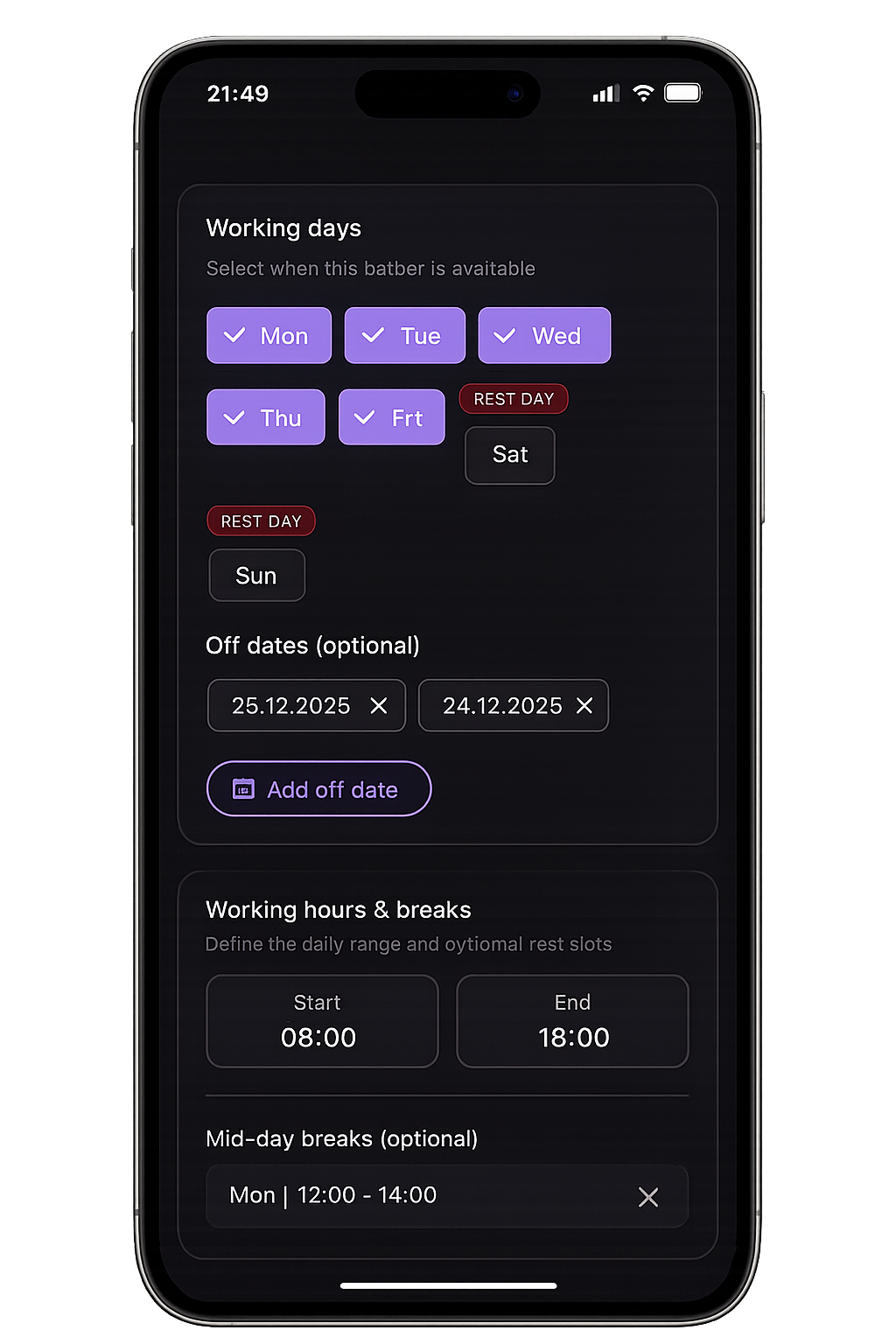
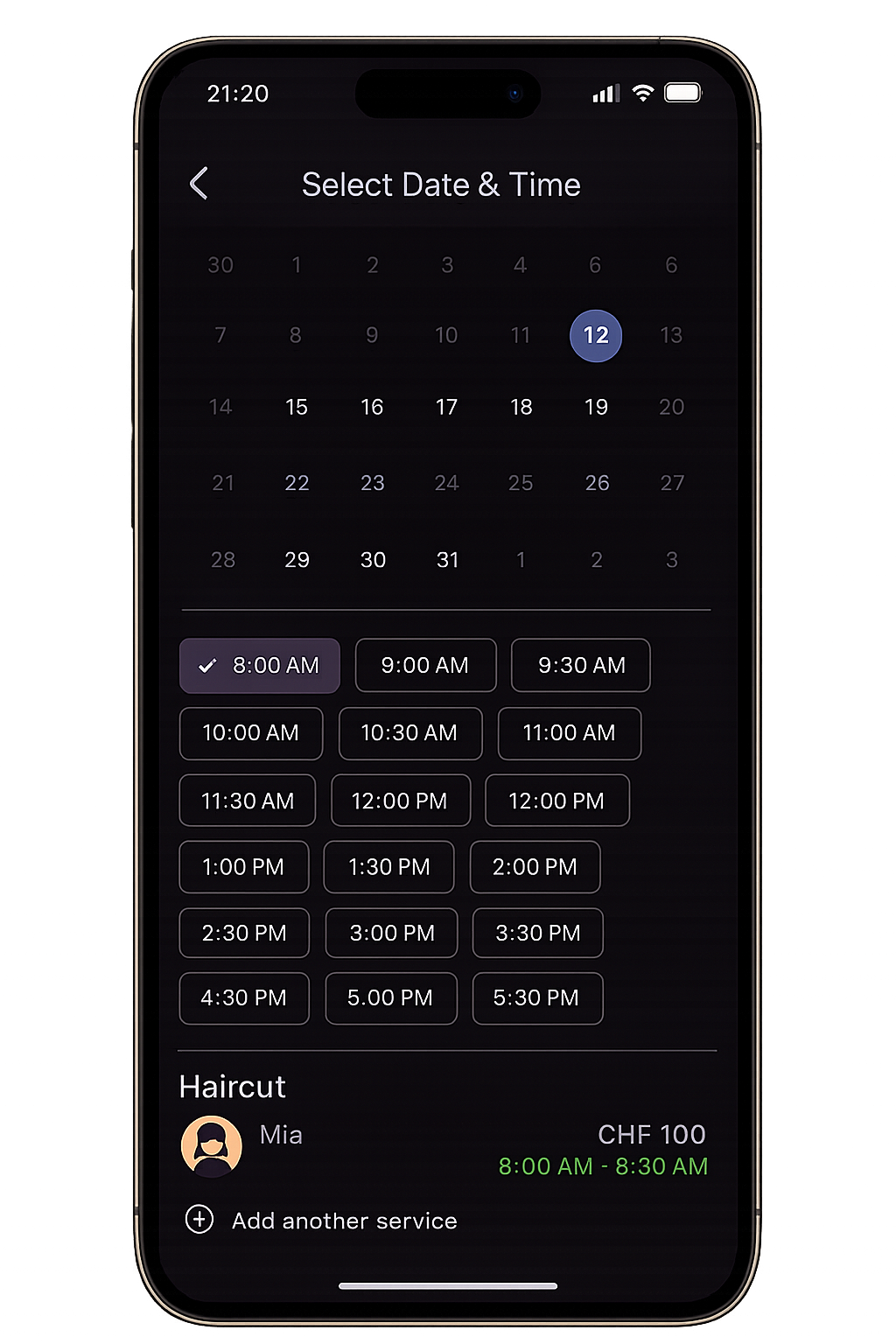
Admin + user
Admin controls on the left. Client booking on the right.
Your team manages schedules, approvals, and offers in the Admin app, while clients book and manage visits in the User app. Both stay fully on-brand.
How a branded salon app helps retain local clients 📱
A branded app keeps clients in one flow—booking, reminders, policies, and rebooking—reducing friction that sends them elsewhere.
Push notifications and in-app rescheduling make staying with you easier than trying a competitor.
Home-screen presence reinforces your brand and keeps you top of mind when clients think about their next visit.
SalonApp, for example, offers a branded salon app that pairs your visuals and policies with streamlined booking so clients stay connected and less likely to drift.
Integrated notes and preferences ensure every visit feels remembered, which is core to beauty salon retention.
Clients read organization as care. A single, branded flow signals you value their time more than a competitor’s scattered DMs and paper notes.
Frequently Asked Questions ❓
Why do salon clients switch to competitors?
They switch for convenience—easier booking, clearer communication, predictable timing—and because small frictions pile up. Price matters less than a smooth, reliable experience.
How can salons reduce client churn?
Make booking effortless, automate reminders, keep a consistent experience, and stay visible between visits with on-brand follow-ups and rebooking prompts.
Is convenience more important than price for salon clients?
In competitive areas, convenience and reliability often beat minor price differences. Clients pay for easy booking, on-time service, and clear communication that respects their time.
Conclusion 🎯
Why salons lose clients to competitors nearby comes down to friction and visibility. Clients stay where booking is simple, communication is clear, and the experience feels consistent.
Fix the small gaps before chasing new traffic: tighten booking, automate reminders, stay present between visits, and keep policies predictable. A branded app can hold it all together and make staying with you the easiest choice.
For internal links, connect this guide to resources on booking automation, client retention playbooks, and brand consistency using varied anchor text like online booking checklist, retention checklist, and brand voice guide.