
Branding
Why White-Label Apps Matter for Beauty Brands (And Why Generic Tools Hurt Your Brand) ✨
Beauty brands pour budget into visuals, training, and service rituals, then hand the client experience to a generic booking tool. That gap is where brand equity leaks. If you want loyalty, your technology needs to look, sound, and behave like you, not like a shared marketplace.
A white-label salon app puts your name, design system, and policies at the center of booking, messaging, and rebooking. Generic booking tools work, but they dilute beauty brand differentiation by mixing your clients with competitors and limiting how you shape the experience. Owning the app protects loyalty and perceived quality.
In practice, the question of why white-label apps matter for beauty brands comes down to control. If you want the same precision in digital as you demand in color formulation or skincare protocols, a branded salon app is the natural extension of your brand standards.
What white-label apps actually mean for beauty brands ✨
White-label technology means the app carries your logo, colors, tone, and rules while the underlying platform handles performance and compliance. Clients see your brand, not a software vendor.
Think of it as the digital equivalent of private-label retail: you get proven infrastructure without giving up brand ownership. The beauty brand differentiation comes from owning the experience end to end.
When clients download a white-label salon app, they keep your icon on their home screen. Every notification and booking screen reinforces your identity. That repetition is what builds recall and loyalty.
Why generic booking tools weaken beauty brand identity 📅
Generic platforms are designed to serve every business the same way. Your logo may appear, but the surrounding UI reminds clients they are in someone else’s product. Over time, that chips away at your brand memory.
Marketplace-style tools can also surface nearby competitors. Even subtle cross-promotions make salons look interchangeable, which is the opposite of a strong salon branding strategy.
Control is limited: booking flows, buffer times, deposits, and policy language often follow platform defaults. That makes it harder to protect service quality or enforce standards you use in the salon.
From a trust standpoint, clients notice when confirmations and reminders switch tone or formatting. Consistency signals professionalism; inconsistency signals a patchwork tech stack.
Data fragmentation is another issue. Notes, formulas, and preferences may not be portable or may sit alongside other brands. That weakens the sense of a cohesive, premium experience.
How white-label apps strengthen beauty brand perception ✨
Full brand ownership: Your branded salon app owns the visual language. Fonts, color palette, and imagery stay consistent with your site, social, and in-salon collateral.
Consistent client experience: Booking flows mirror how you operate—consult-first, color-second, with built-in buffers. The tone of reminders and post-visit care matches your voice.
Stronger trust and professionalism: A cohesive, polished app signals you invest in client comfort. When the experience feels unified, clients assume the operations behind it are equally disciplined.
Long-term differentiation: White-label salon apps keep clients inside your ecosystem. You can launch memberships, sell retail bundles, and prompt rebooking without competing messages.
First-hand insight: after rolling out white-label apps for multi-location salons, the fastest wins came from small details—push reminders in the salon’s tone and service-specific prep checklists. Those changes lifted rebooking because clients felt guided, not commoditized.
White-label also improves data quality. When staff use one system for notes, formulas, and photos, you reduce errors and keep history intact. That consistency is felt every time a client returns.
When white-label apps make sense for salons and beauty brands ✨
If you are competing on experience, not price, brand ownership in tech is non-negotiable. White-label apps support premium positioning by keeping every touchpoint on-brand.
Salons with high repeat volume or memberships gain the most. Loyalty programs, VIP booking windows, and targeted offers all work better inside a controlled environment.
Multi-location brands need consistent standards. A branded app unifies pricing rules, service naming, and policy language while routing clients to the right location.
If you already invest in photography, packaging, and training, leaving the digital front door unbranded undermines that spend. A branded salon app aligns the last mile of client experience with the rest of your brand.
SalonApp, for example, delivers a white-label salon app with your colors, policies, and notifications so clients see your brand at every click while the platform handles the heavy lifting.
ROI shows up in reduced churn and better rebooking. When clients associate convenience and consistency with your brand, they return faster and are less likely to price-shop.
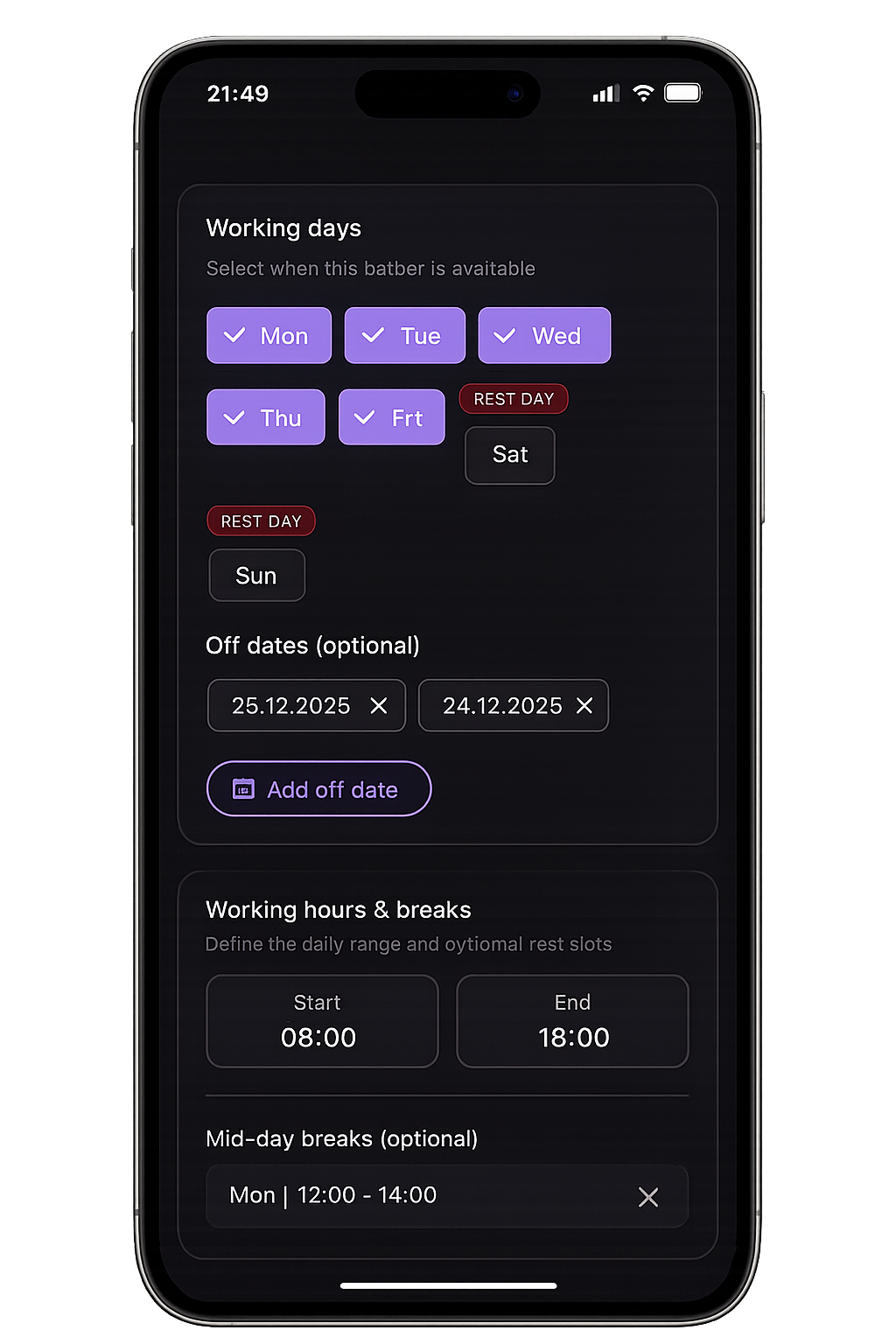
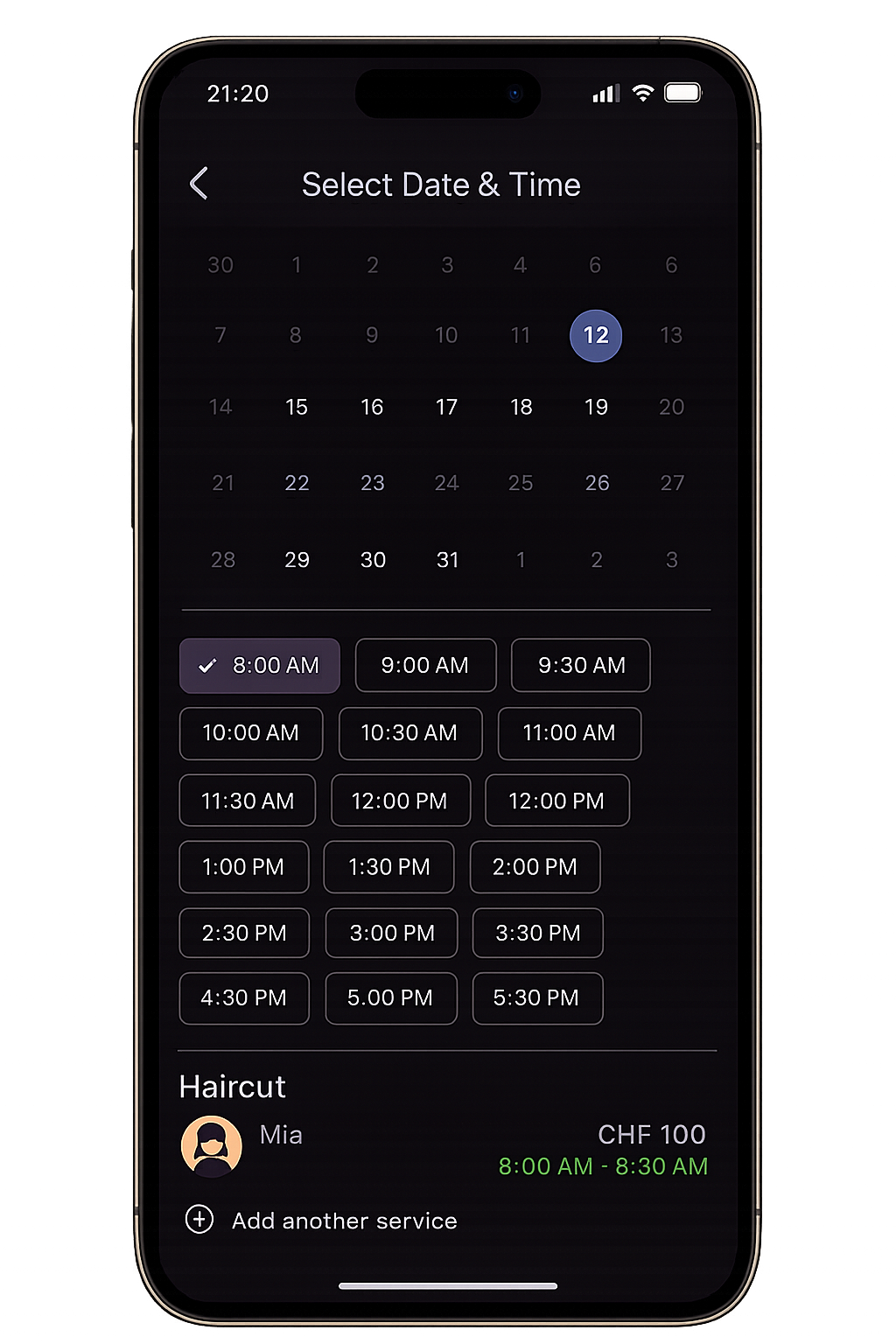
Admin + user
Admin controls on the left. Client booking on the right.
Your team manages schedules, approvals, and offers in the Admin app, while clients book and manage visits in the User app. Both stay fully on-brand.
Frequently Asked Questions ❓
What is a white-label salon app?
A white-label salon app is a fully branded mobile app where your logo, colors, and policies are front and center while a proven platform powers booking, reminders, and payments in the background.
Are white-label apps worth it for small salons?
Yes, if you rely on repeat business. Even a single-location salon benefits from branded rebooking, consistent reminders, and loyalty flows that keep clients coming back instead of browsing competitors.
How do white-label apps improve branding?
They align digital touchpoints with your salon branding strategy: home-screen presence, on-brand notifications, tailored booking rules, and a unified look that reinforces trust and professionalism.
Conclusion 🎯
Why white-label apps matter for beauty brands is simple: they keep your identity intact while giving clients a smoother path to book, buy, and return. Generic tools deliver function; branded tools deliver loyalty.
Brand-owned technology is becoming a competitive advantage. Choose platforms that protect your differentiation, make rebooking effortless, and reflect the quality you promise in every service.
Next steps: link to resources on online booking setup, brand consistency, and your technology stack. Two to three internal links with varied anchor text (for example, booking automation tips, brand voice checklist, mobile app rollout guide) will help clients and search engines navigate related topics.